


Bald Eagles of Alaska


I have been deeply fascinated by Raptors since I was a Kid and one of my lifetime ambitions as a photographer was to photograph a Golden Eagle. It was impossible in those early days unless you could get a licence to photograph them at the nest, which the average tog could never do in the UK. I still remember seeing my first Golden Eagle circling high over the Monadhliath Mountains in Scotland, it was miles away, but I still took the photograph. Slowly but surely things started to open up a bit and you could then, if you had the patience and a little bit of spare cash go to countries like Norway or Finland and sit in a hide for hours on end waiting for an elusive Eagle to come down and take advantage of the food that had been placed out. The first ever shot I managed to take of a Golden Eagle was taken in Norway at my great friend Ole Martin Dahl’s location in Flatanger. It remains one of my all-time favourite images as I can still remember the buzz, I got from finally being able to achieve my goal. Since taking that first image of a Golden Eagle I have been addicted to photographing Eagles ever since. Whether it is Golden Eagles in Norway, White-tailed Eagles in Finland, or the majestic Steller’s Sea Eagle in Japan, I have visited all the classic places and spent so much time waiting for the perfect shot.


Up until a couple of years ago one member of the Eagle family that had eluded me was the beautiful Bald Eagle. You only see this species in the States, and I had managed a couple of efforts in Yellowstone National Park, but they were not great. So, I set myself a target and started researching various places to see if I could find some better opportunities. I had seen lots of images coming from Homer in Alaska during the winter and this looked a great location with some great potential. The Eagles were being fed by a lady called Jean Keene and it was on the spit at homer. It looked a great place for intimate portraits but the location itself was a little busy and left a doubt in my mind as to whether I could justify spending the money on a trip as getting to Alaska is not cheap and so I never seriously made an effort to go and visit. Unfortunately, the lady passed away and it left me wondering whether I had missed a great opportunity and experience and I learnt a hard lesson in not taking the chance. After years of being fed by Jean the Eagles were struggling to find enough food during the lean winter months and because this place was all they knew of as their wintering grounds they did not move on. It is a classic example of when humans start to feed an animal that it then starts to depend on that food source, once you stop, they struggle. In hind sight it is probably best not to do it in the first place but if it is done correctly then it can be a huge benefit to not only the birds but also ourselves as it brings us an experience with the natural world and protects that species.
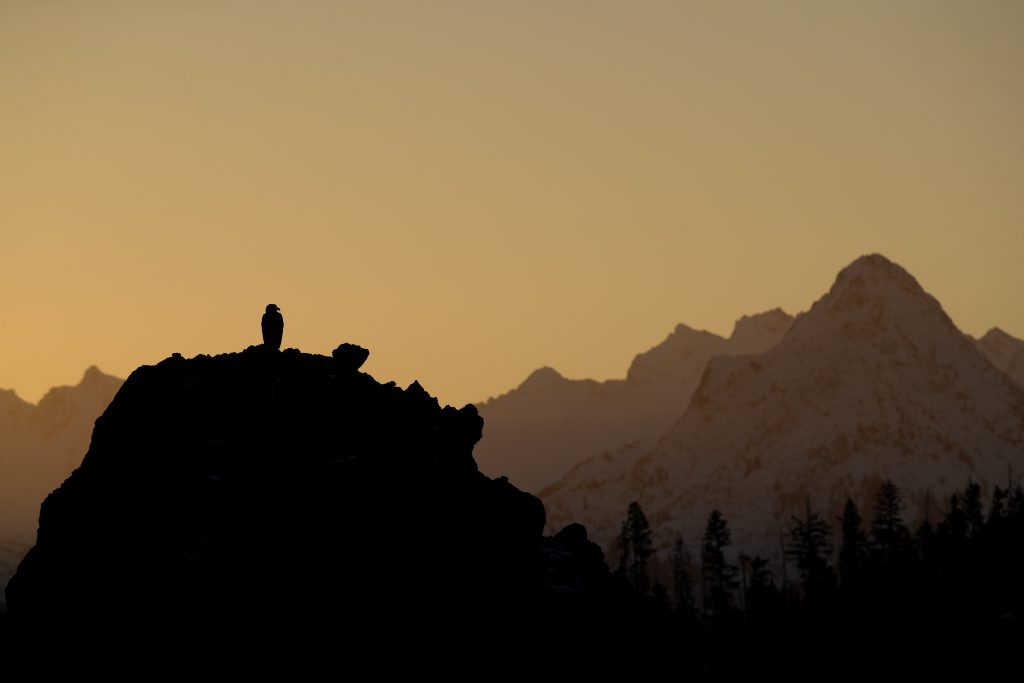
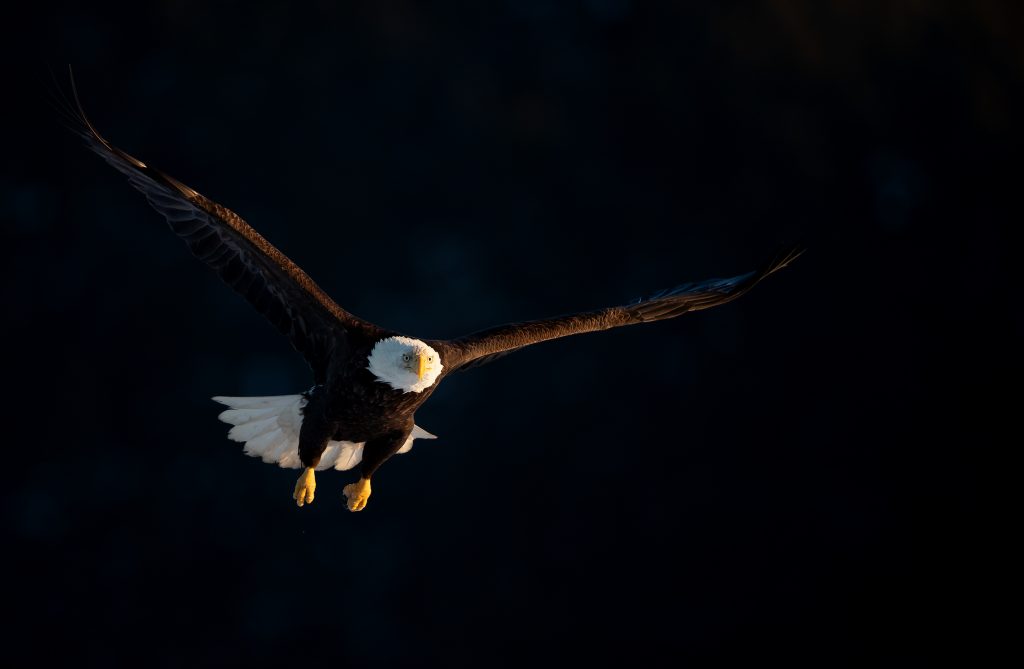
So, the Eagles were struggling, and the local authorities decided to do something to help and now you have a couple of boats that go out to feed the eagles. They do not feed the Eagles on the spit itself anymore but go out across the bay to Kachemak Bay and what a great move that was as Kachemak Bay a is a stunning backdrop with high mountains and deep fjords the perfect setting for this American Icon. The Eagles just sit in the trees or cliff faces looking out over their domain and are always alert to any chance of a meal. I am convinced that they recognise the boat because as soon as you stop the Eagles just appear from nowhere. If you can imagine the spectacle of Red Kites at Gigrin farm but out at sea. The beauty of working from a boat is that it gives you so much flexibility and so you can react to certain conditions or certain light. After visiting a few times now, I have built up a little knowledge of the area and where the best light is going to be at first and last light of the day. I also know what backgrounds can work best and so I try all sorts of different tactics and usually make the most of the weather which depends on where we go or what we work on. If the light is good, I try for flight shots so I can get enough speed to arrest the movement as the Eagles swoop down to the surface of the water to grab a fish. If the light is poor, we can then switch tactics and land on a beach and within a few minutes the Eagles have landed too. This is a great way of working on intimate portraits or capturing the behaviour of them fighting over the fish.
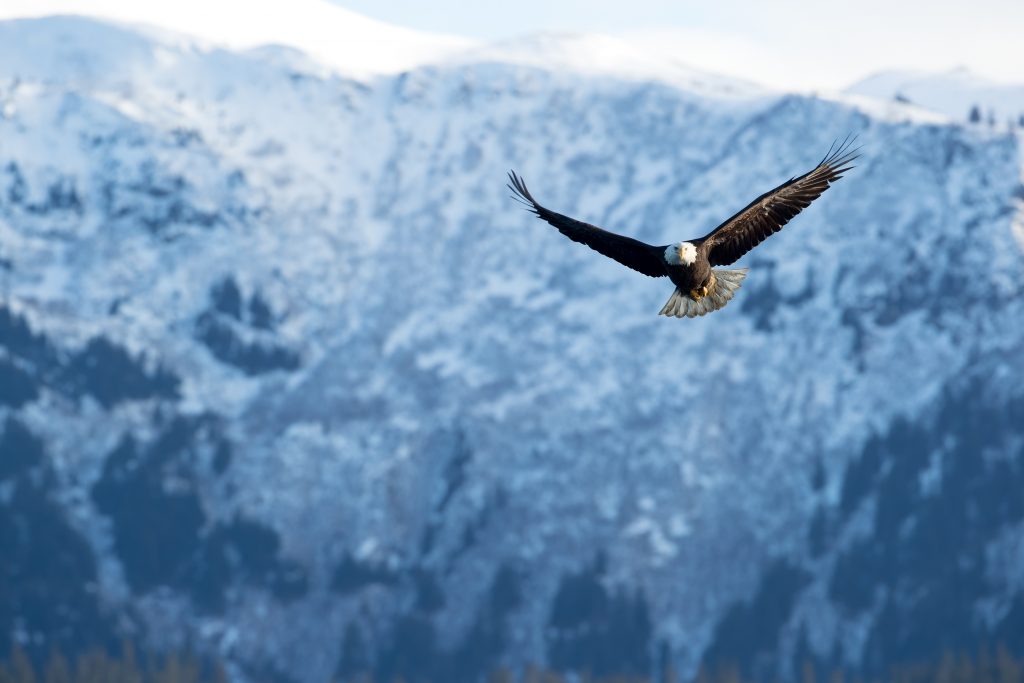


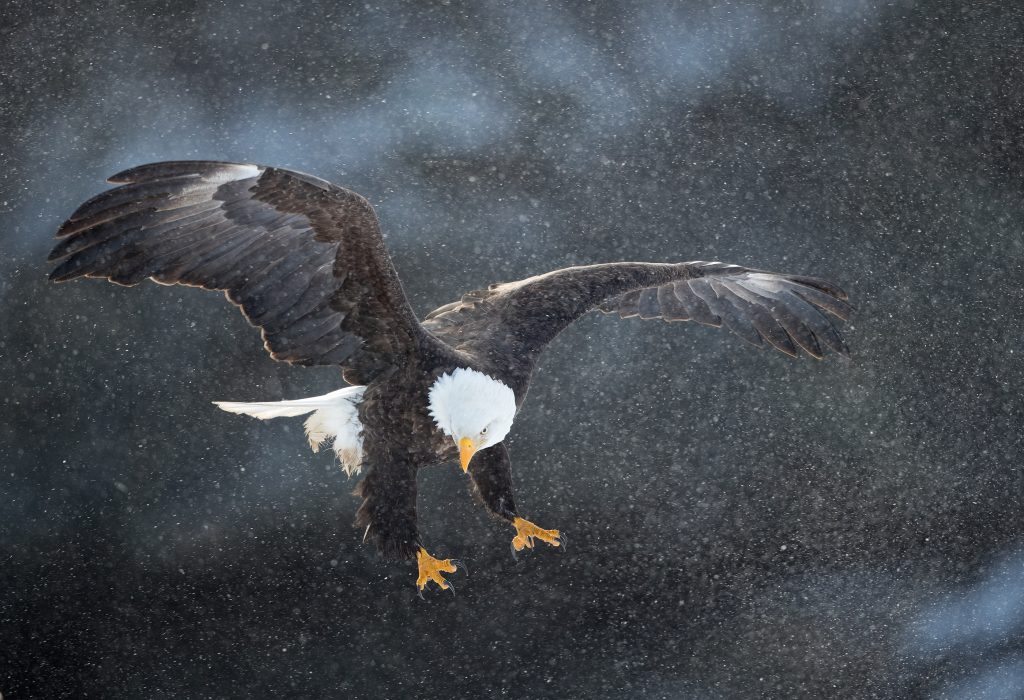


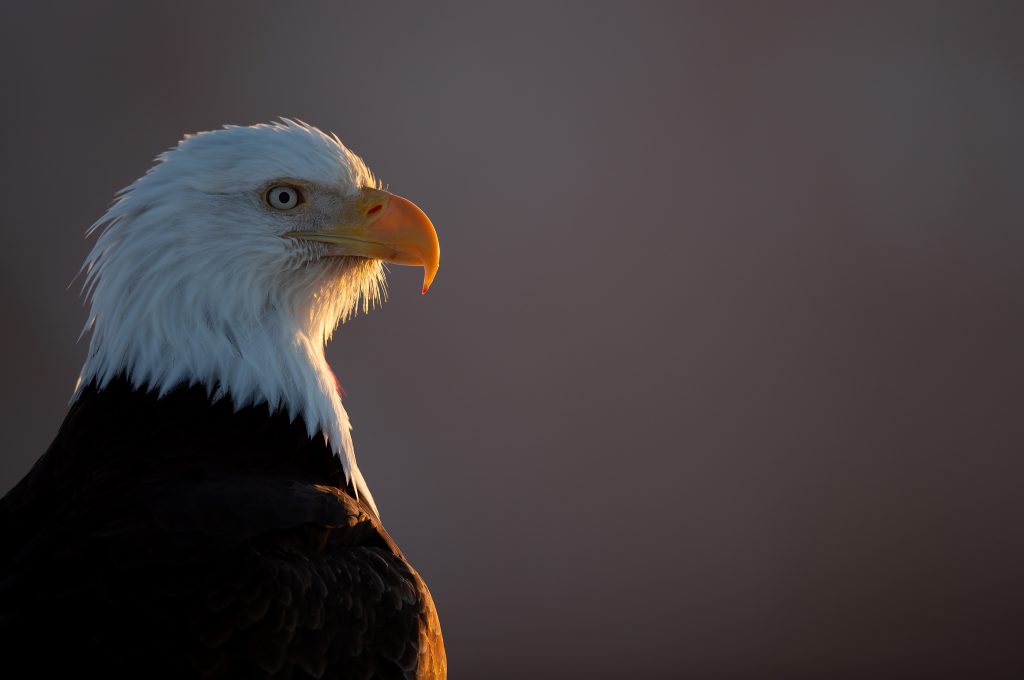

After my initial recce I turned it into a trip with Natures Images and at first it kind of went under the radar as we struggled to sell enough places as I guess it is a long way to go to photograph one species. After running a few trips now and listening to the feedback from our guests it is certainly a trip that we will continue to run with for the time being. It is always a major worry for us when we organise a trip that we are actually going to get the opportunity to seeing and photographing our intended subjects, it’s not the case with these Eagles as they will be there waiting. Seeing these American Icons up close and personal has got to be one of the best experiences to witness in the natural world and for that we pay thanks to Jean Keene, what a legacy she has left.
Back to news index
Please address the areas highlighted below