


Icelandic Arctic foxes


I photographed my first fox in 1989 and it was a Red Fox that was visiting an elderly couple’s garden who had been feeding the local foxes for years. They would put out the food at the same time every night and within half an hour a little vixen would turn up to take advantage of this free hand out. I knew from that first encounter that I wanted to spend more time photographing foxes and it would be difficult to just keep going round and disturbing this couple each evening, although to be fair they probably wouldn’t have minded as they were so helpful. So, I had to find my own site and work with them that way so I could spend as much time with them as I could, learning their behaviour and patterns. I have been hooked on foxes ever since. I still get a buzz of out seeing a fox to this day. Once I started to travel overseas in search of my images it was inevitable that I would start thinking and trying for that other beautiful fox that you can find in Europe, the Arctic Fox.


My first encounter of an Arctic Fox was on the border of Norway and Sweden in a National Park called Bjorgefjell. This is high arctic country that supports lots of arctic species like Long-tailed Skuas, Dotterel, Ptarmigan and Lemmings, and of course a few Arctic Foxes. It was during the early summer and I was mainly there to photograph the Arctic birdlife but got side-tracked after I stumbled across an Arctic Fox den. It had been a lemming year (which is usually on a 4-5-year cycle) as they seemed to be everywhere, and the foxes were doing very well with all this glut of food around. I watched from a short distance as the adults came in every hour or so to feed their amazing total of 11 cubs. It was an amazing encounter that I will never forget. I was using film in those days with some basic equipment and boy I wish I had an opportunity like that now days. So now I was hooked on Arctic foxes.
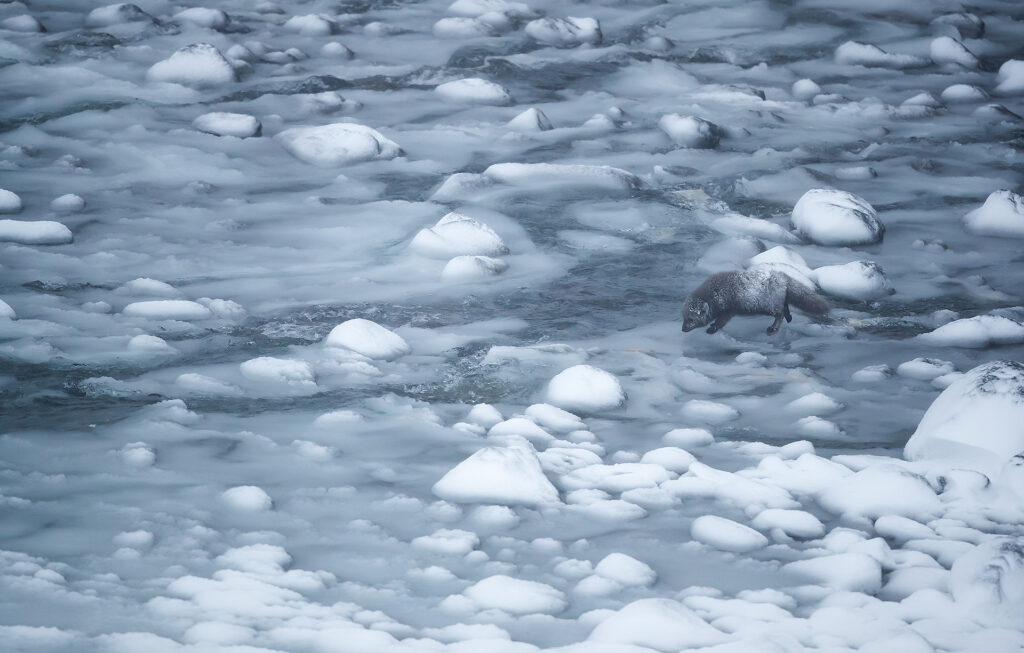
I have been extremely fortunate since that encounter and I have photographed Arctic Foxes many times in places such as Svalbard, Alaska, and arctic Canada. These places are not easy to get to and so are not cheap, but I am always trying to find out if there are other locations. One location that was a possibility to see Arctic Foxes and an easy place to get to in terms of travel was Iceland. I had been to Iceland many times photographing the birdlife, travelling around the whole country and although I had seen foxes. it was impossible to get close enough to photograph them as they were so nervous of humans. Foxes are not welcome in large parts of Iceland and have been relentlessly persecuted for centuries because of the belief that they take young lambs and also the damage they can do to Eider farms which is still a big financial incentive in some parts. So, although there is still a good population, I thought it would not be possible because of how elusive they are.
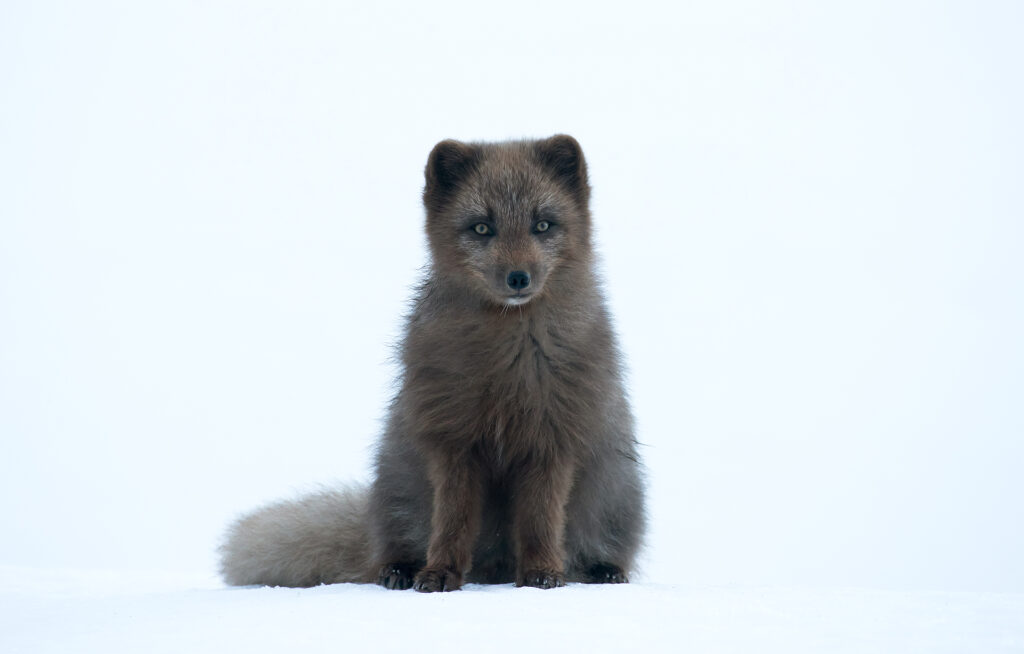
My friend Terry Whittaker (a fellow photographer) changed my mind on that big time a few years later as he started producing some wonderful images from Iceland. I got in touch and we started to plan a trip. The location was Hornstrandir National Park in the north west of the country. This is an extremely remote location even by Icelandic standards and there are no roads leading to the peninsular, so the only way of getting there is by boat or hiking. The Arctic Fox has also been protected in the National Park for a long time and as a result they are less afraid of humans. The location itself is stunning and so you have all the ingredients of producing some wonderful images.


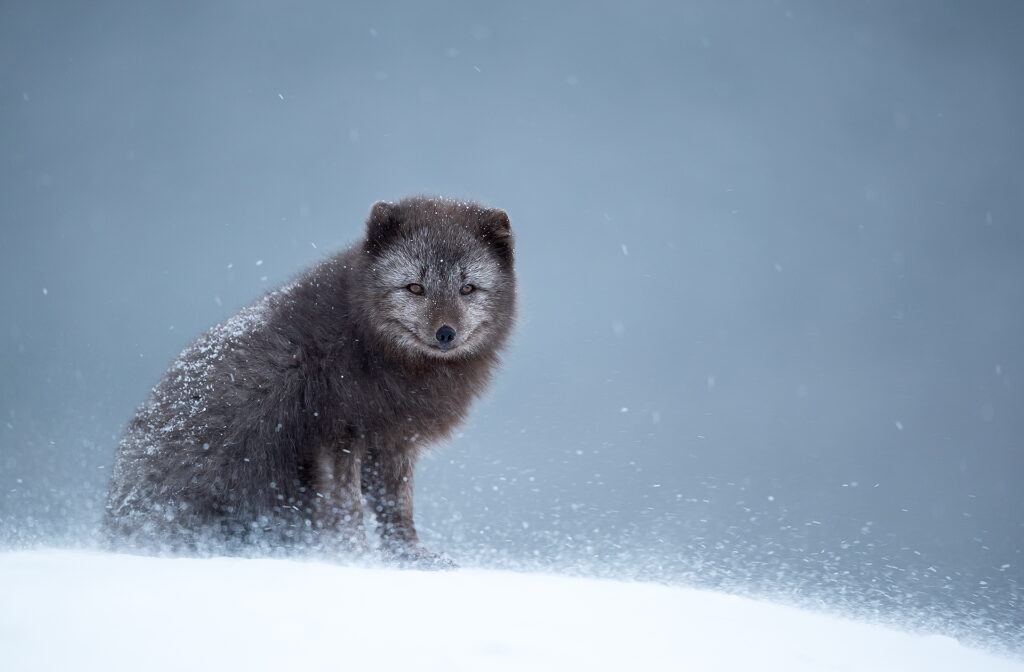
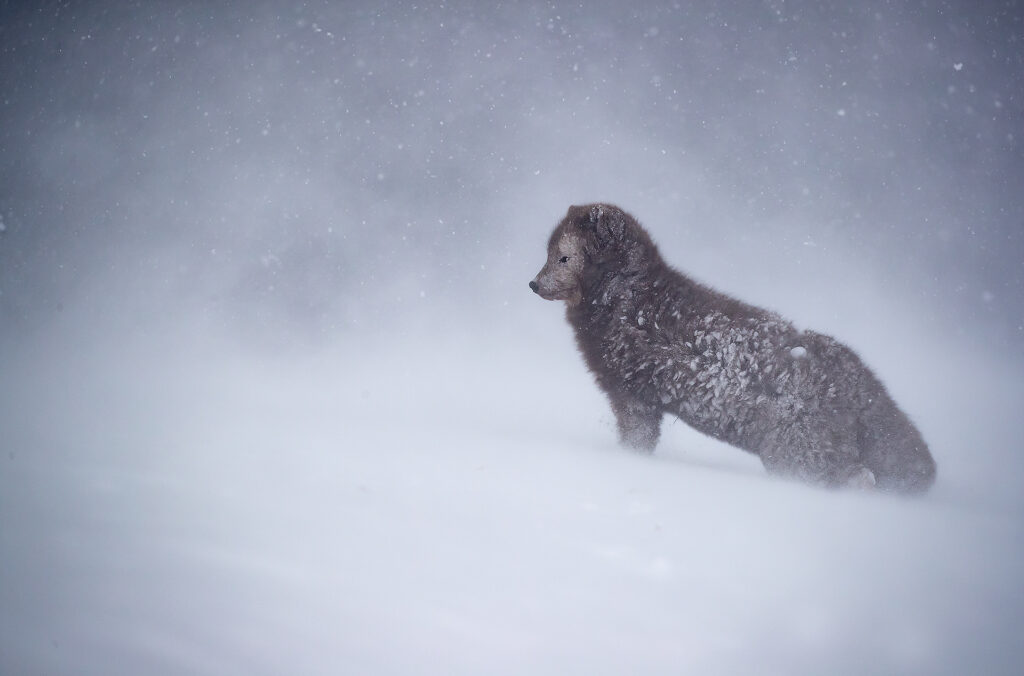
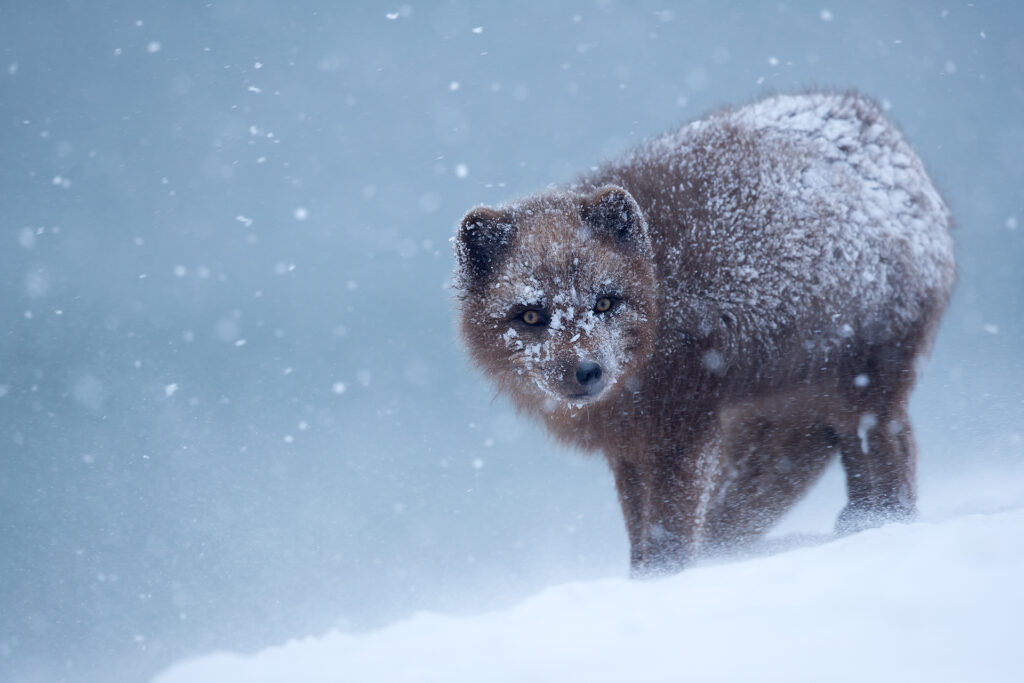
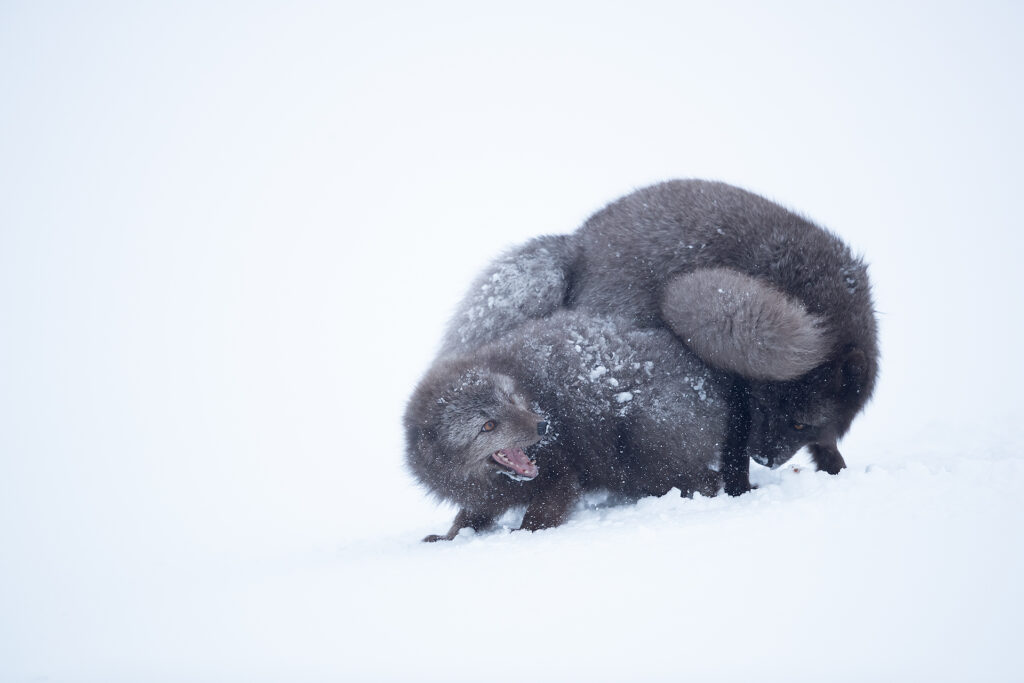
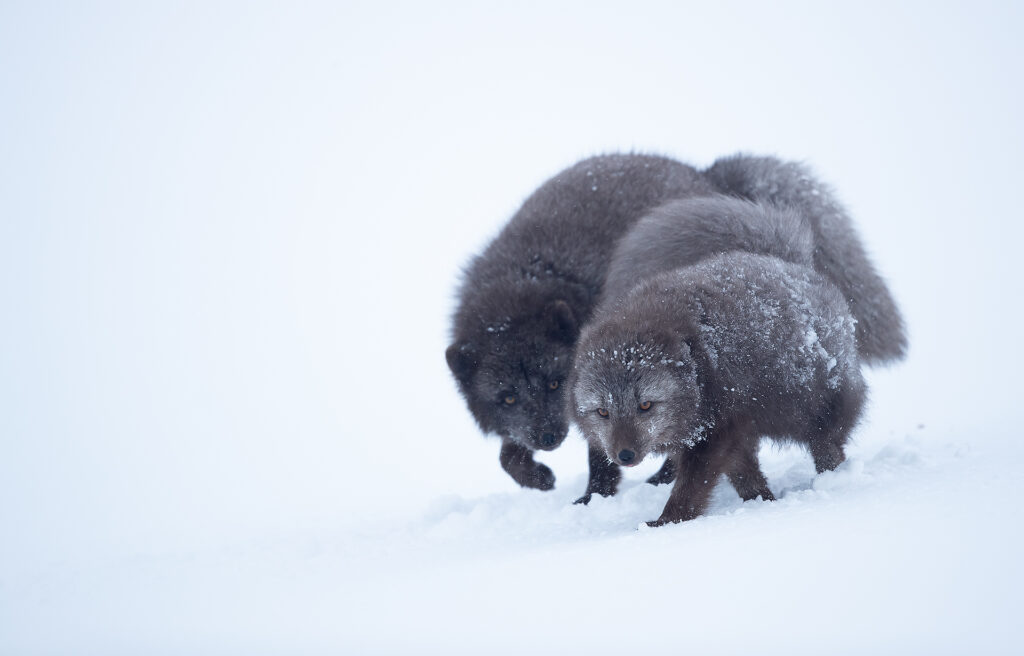
I thought my first trip to Hornstrandir would be in the summer months, but Terry convinced me that the best time to visit would be during the winter. I was not convinced as I thought the difficulty in getting there would be just too much. We had good help though in the form of local Icelanders Runar and Smaug and Icelandic people do not use the word impossible in their vocabulary. The difficult part was going to be getting ourselves, supplies and all our equipment to the peninsular. Once there the photography was pretty easy as we did not have to go far to find the foxes as they came to us. One thing you can say about this beautiful little fox is they are resourceful and know how to survive. We stopped in an old farmhouse which was amazingly warm and comfortable and just waited for a fox to turn up. The other plan was to sit by the shore and wait for a fox to come by as it searches the tideline at low tide.

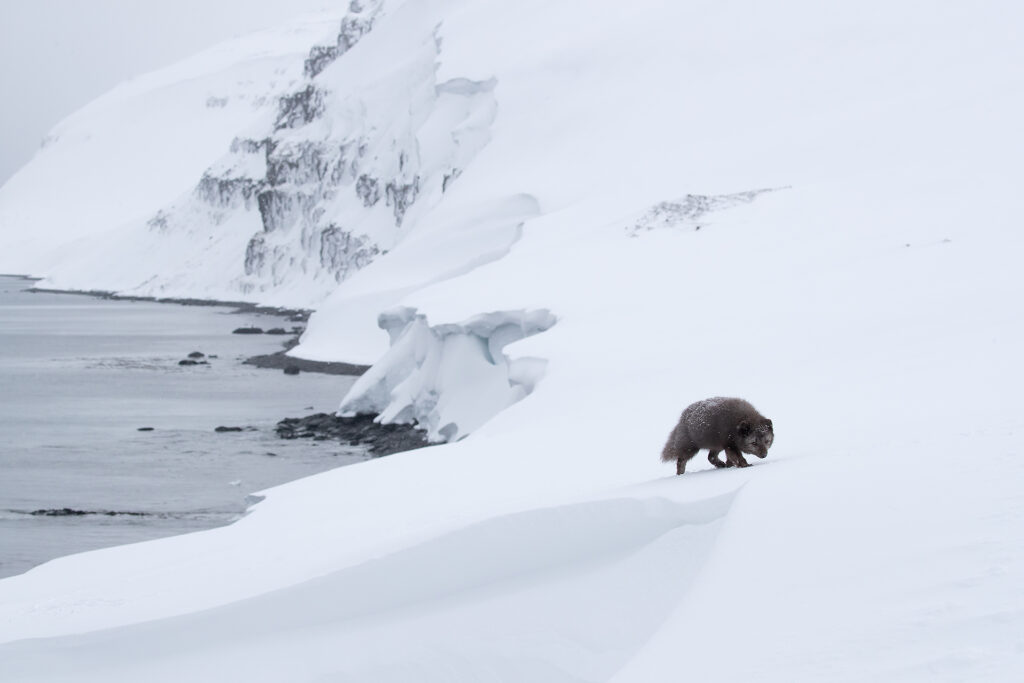
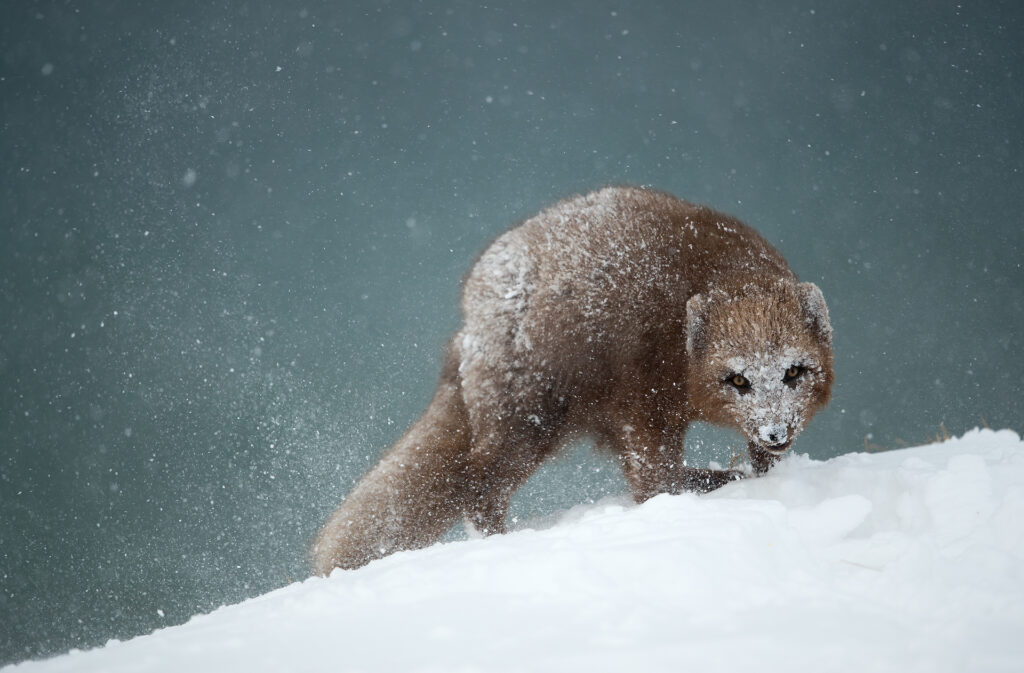
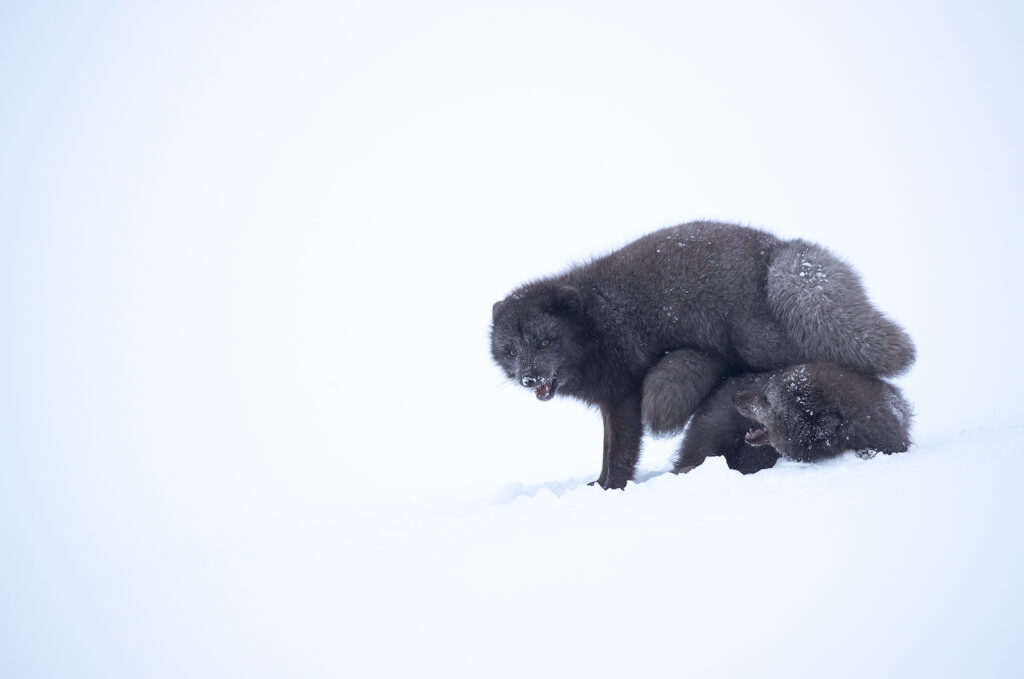
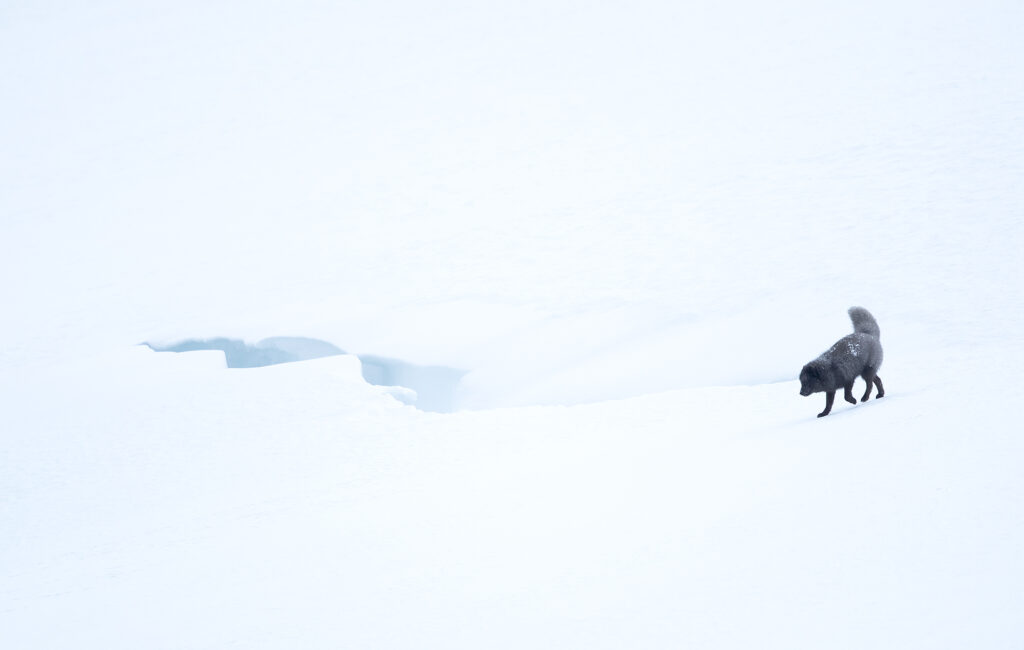
These foxes in Iceland are slightly different to the Arctic Foxes around the rest of the arctic. They are so dependent on the rich food source of the summer months in the form of large seabird colonies and huge numbers of ground nesting birds. There are no Lemmings in Iceland so that rich food source it not available and unlike other parts there are no Polar Bears which foxes follow during the winter to take advantage of any carrion. Arctic Foxes in Iceland rely on the coastline during the winter months to provide them with food. That is one of the theories behind the fact that the Icelandic population is around 80% of the blue morph gene, unlike in other parts of the Arctic where the white morph is getting on for 95%. It makes sense as there is no need to be white during the winter when most of your food source comes from the ocean.
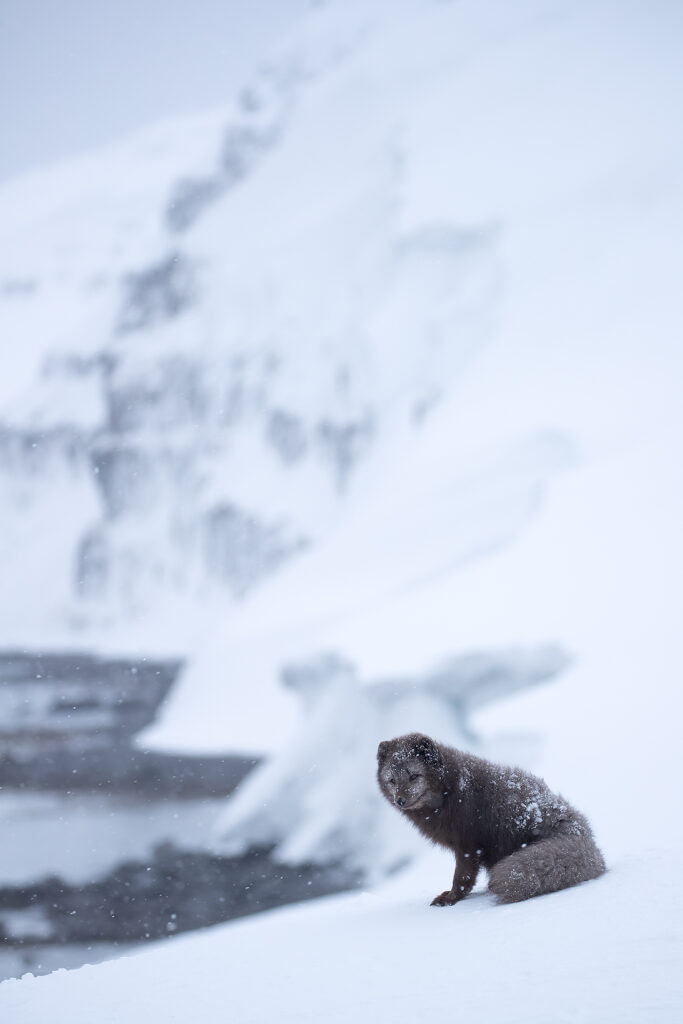
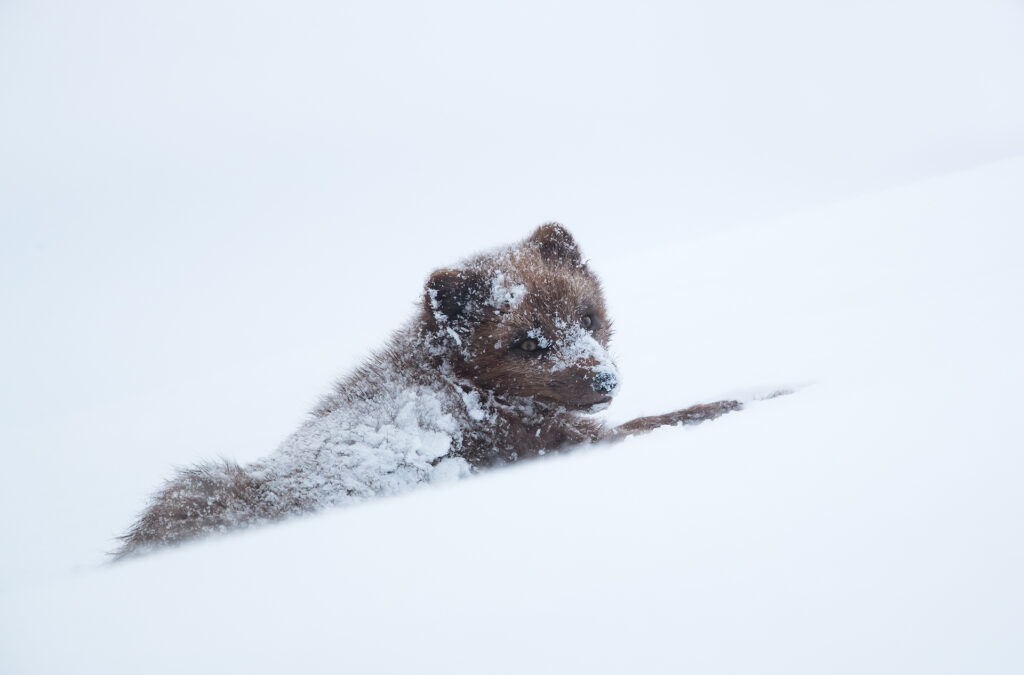
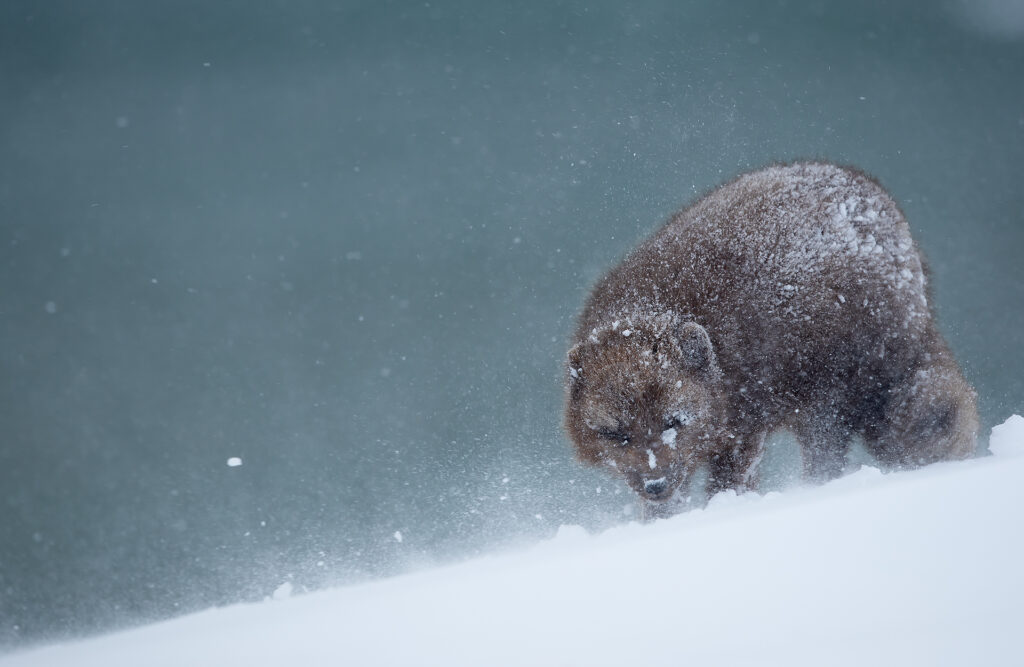
Photographing these foxes in these winter conditions was a real challenge as the weather can be brutal along this stretch of coastline. I was up for the challenge though as I just love working in these kinds of conditions and I think it really shows what a true survivor this little fox is. I still wanted to try and photograph them during the summer though and on that first winter trip we planned a summer adventure. Hornstrandir is beautiful in the winter but I think it really comes into its own during the summer. It is such a stunning landscape and the perfect backdrop for the foxes that live there.
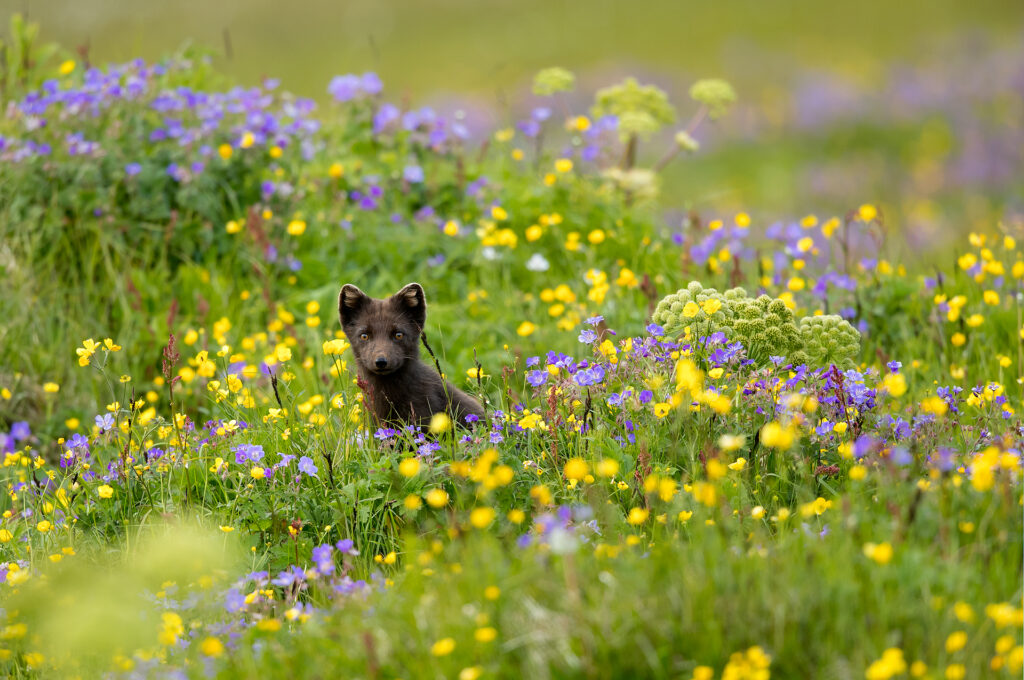

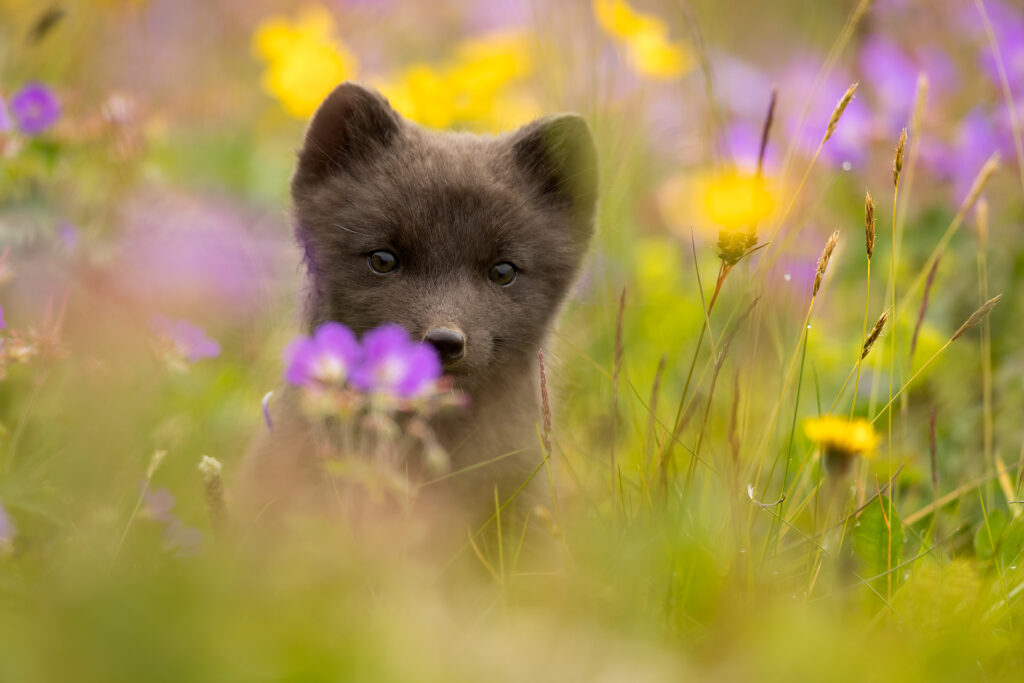


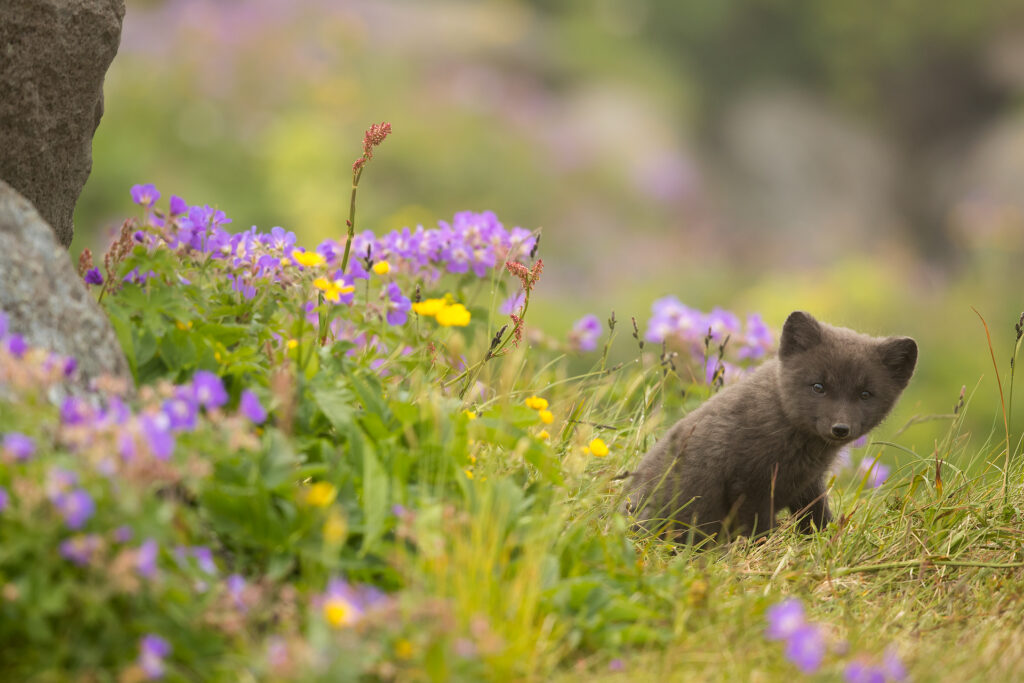
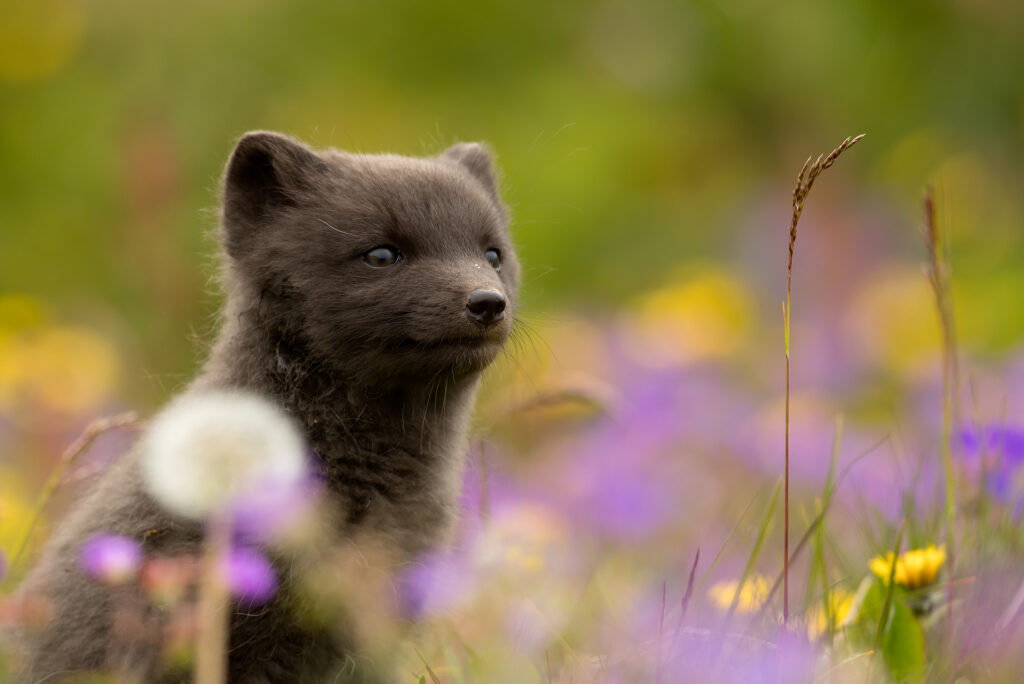

We still had the same problems logistically but it’s just a more pleasant experience. This time we had to camp and hike more to where the foxes can be found but the effort was worth it. The environment is special too with a rich flower bed dotting the coastline and the foxes just looked great amongst this colourful floral palette. One particular family was a highlight for me though as the vixen had decided to den right next a well-trodden path and as a result the cubs were much bolder and just by sitting quietly and waiting they would come amazingly close. I have plans to go back in the summer and I am already looking forward to spending some more time with these little foxes next winter. I guess I will never tire in looking for the next set of images of these beautiful foxes.


Please address the areas highlighted below