


Iceland’s Arctic Foxes
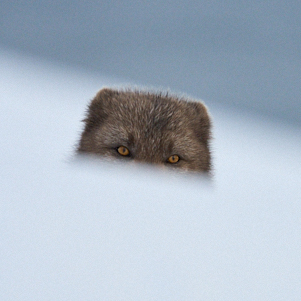
Our guide Terry Whittaker has been visiting and photographing Arctic Foxes in the remote corners of Iceland for over a decade now and with family in the country as well it feels very much like a second home to him. Hot on the heels of the recent winter’s trip there we asked him to share some images and thoughts on the challenges of working with these characterful mammals in both winter and the summer months when we run trips there under his expert guidance…

It’s fair to say that every winter trip to Hornstrandir is different. Some years there is so much snow and blizzard conditions we can’t work far from the house.

Occasionally, although this hasn’t happened for a few years, there is so little snow that we have to walk up the hill a way to photograph foxes on it. And everything in between. This year was a little more different than usual in we had all the conditions in one week. On arrival there was a really good covering of fresh snow and below freezing temperatures kept it there for a couple of days.
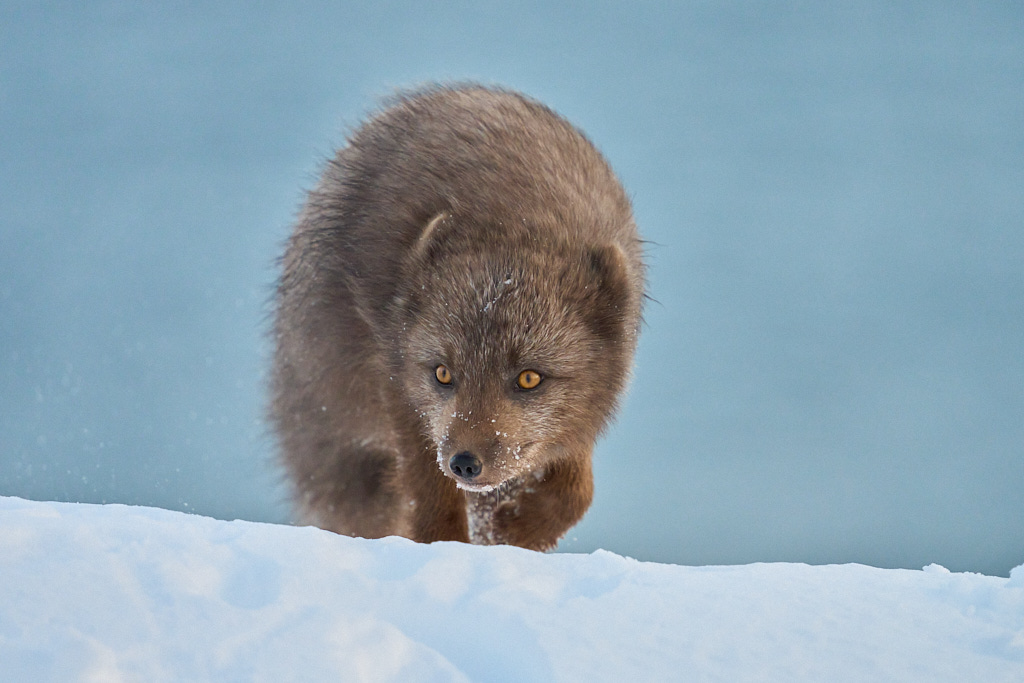
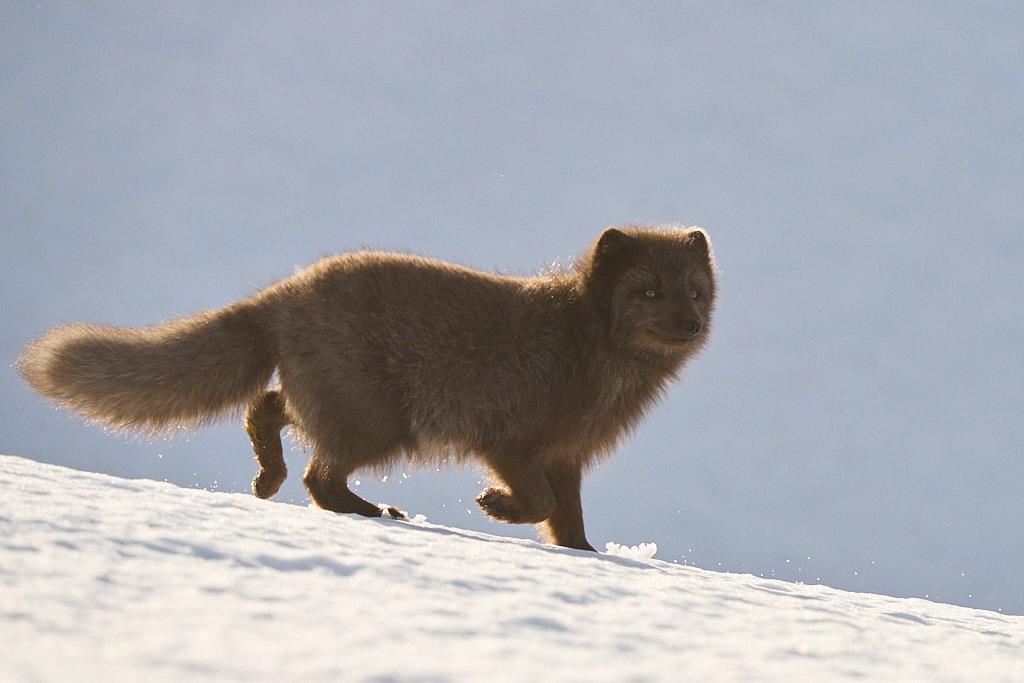
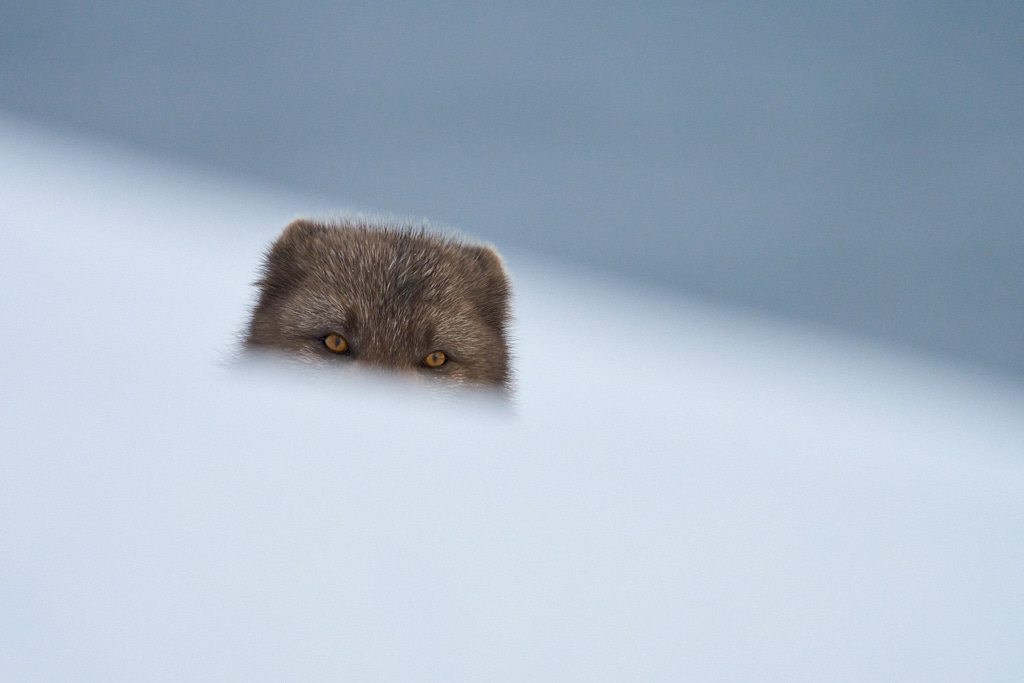
Then it dropped to minus seven for a day (with spindrift winds) before suddenly rising to plus five the next.
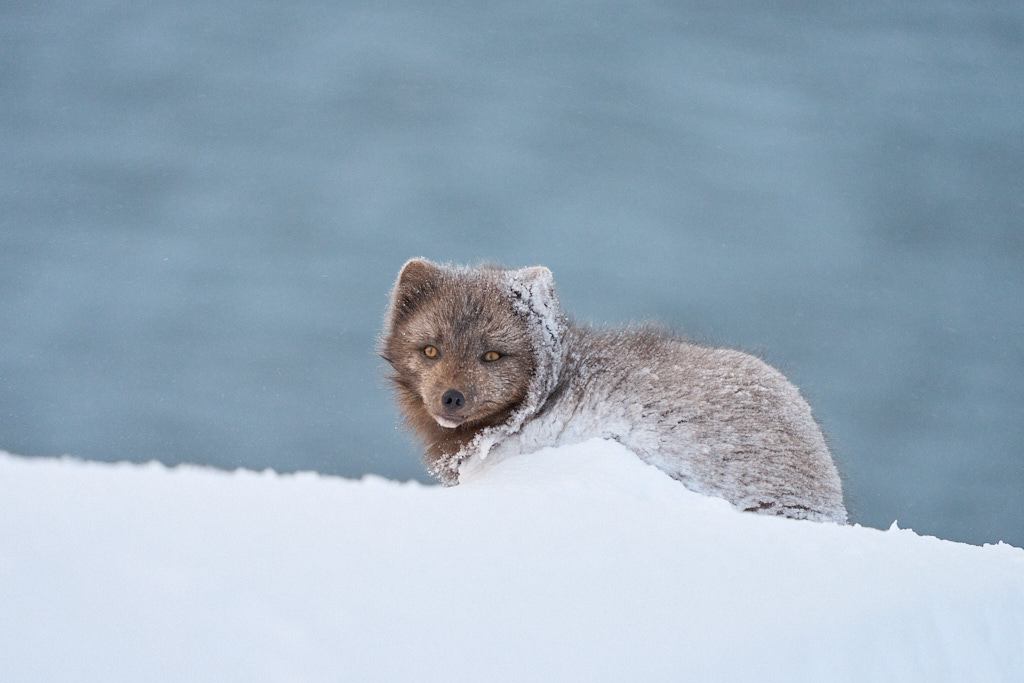
From this point the snow receded rapidly. But the tides were with us and low water was in the afternoon and this is when the foxes make their way to the beach to forage in the inter-tidal zone.
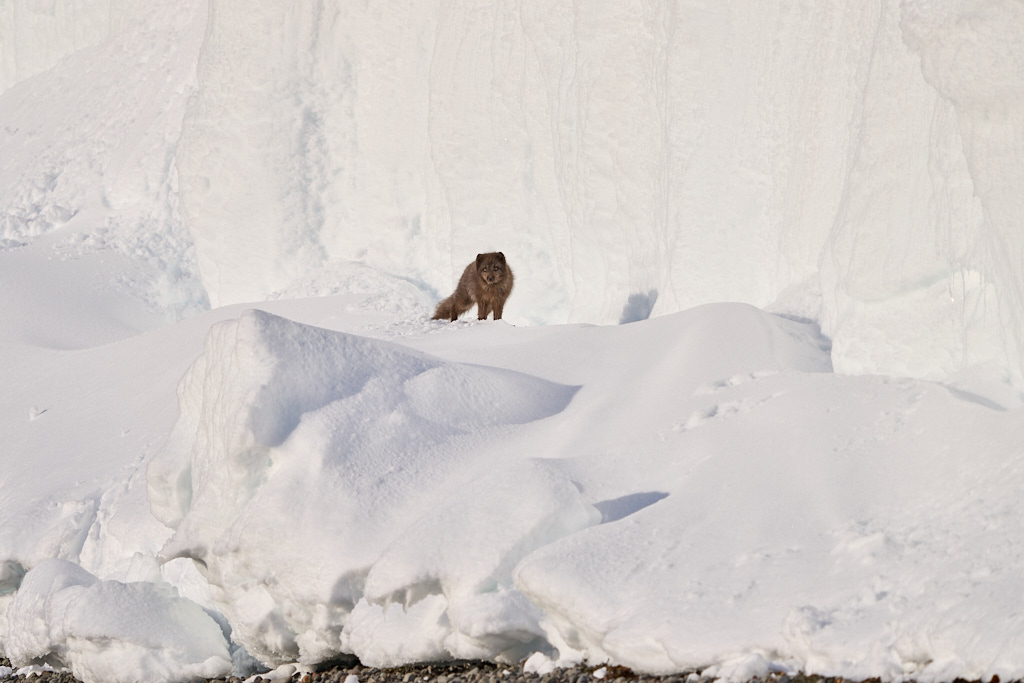

There are two relatively distinct populations of Arctic fox in Iceland. Inland foxes occur mostly in the east and highlands, feeding on berries in summer and autumn along with any birds and eggs they can find plus sheep and reindeer carrion. These foxes have low population densities due to limited food resources. Approximately fifty percent of them are of the white morph. Heavily persecuted, they are shy and wary of people.
In the Westfjords and particularly around the Hornstrandir peninsula, we find the coastal Arctic fox. Predominantly of the blue colour morph, these foxes have a much higher population density due to a more abundant food supply. They are also protected here. The most fiercely contested and successful territories are those with seabird colonies. During spring and summer the foxes take nesting birds and their eggs and young birds as the season progresses.
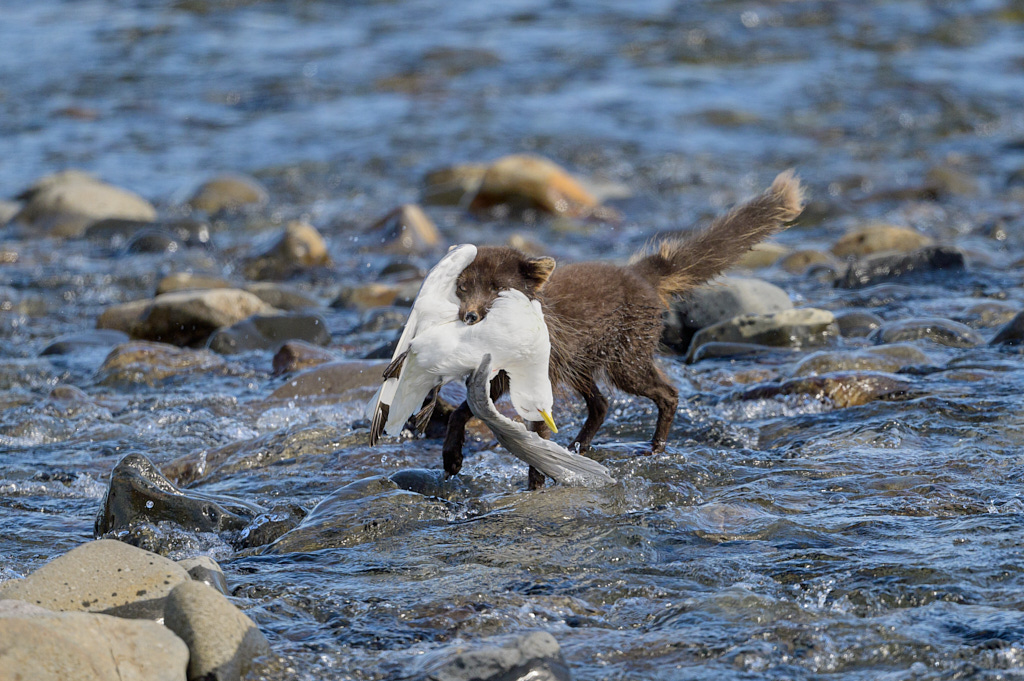
In winter the foxes forage along the shoreline for crustaceans, dead fish and stranded sea mammals.


To be able to photograph foxes feeding on the beach in winter requires low tide during daylight and on this year’s tour it was throughout the week. This meant we could photograph the foxes on the snowbanks in the mornings whilst they waited for the tide, then follow them down to the inter-tidal zone and photograph them foraging there. This year, sea urchins were particularly abundant and make for great photos as the foxes, after finding them beneath the seaweed, take their substantial prize up on to a snow ledge to eat.

For this we use a similar tactic to how we photograph the foxes in summer where from a good spot on the beach we wait for the foxes to pass by while foraging along the shoreline or carrying prey back to their young. Along with these few images from this year’s winter tour, the following are from the last two summer tours for comparison.
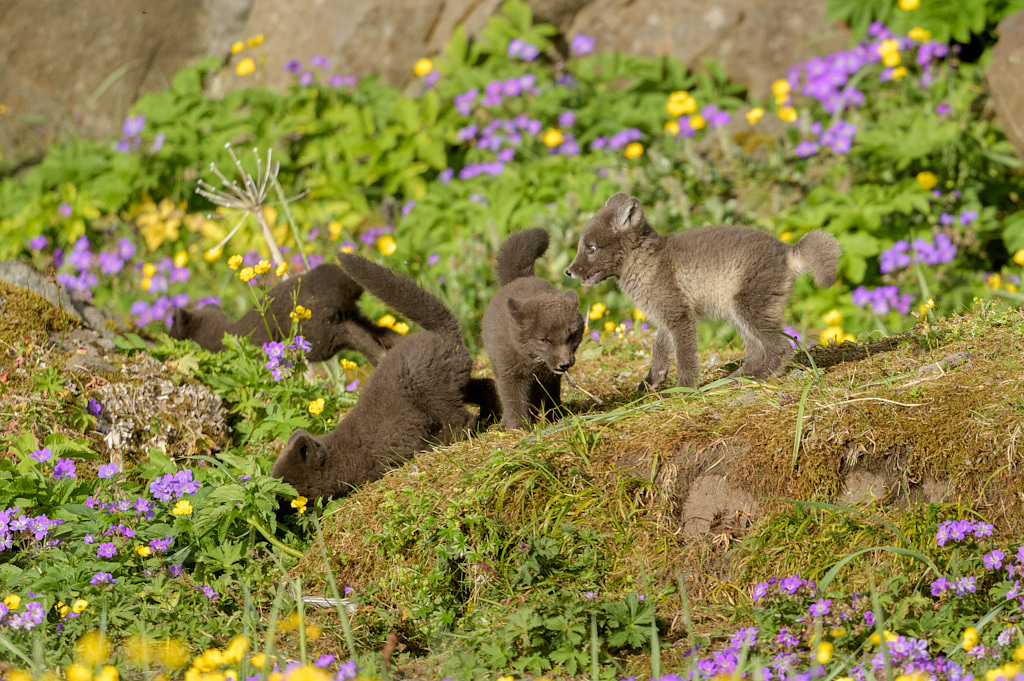

Roll on next years seasons and whatever opportunities they bring!
Terry
Back to news index2 thoughts on “Iceland’s Arctic Foxes”
Please address the areas highlighted below
Would like to know if here is a workshop to photograph these wonderful animals. Keep me posted please
Full details of 2 trips next year in the winter and summer respectively can be found here Anthony:
https://www.natures-images.co.uk/holiday/winter-arctic-fox-iceland-2024/
https://www.natures-images.co.uk/holiday/summer-arctic-fox-iceland-2024/
Thanks for the interest.