


Embracing the sense of place in Namibia
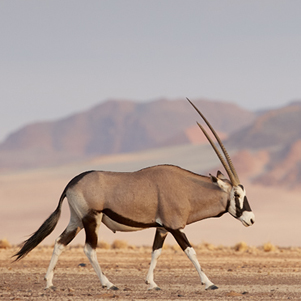
Mark has been photographing independently as well as guiding in Namibia which he calls his favourite corner of Africa, for approaching 20 years now. He shares his thoughts on how firstly appreciating and then incorporating a sense of the place into his images is his favoured way to work here photographically with some new images from this years trip.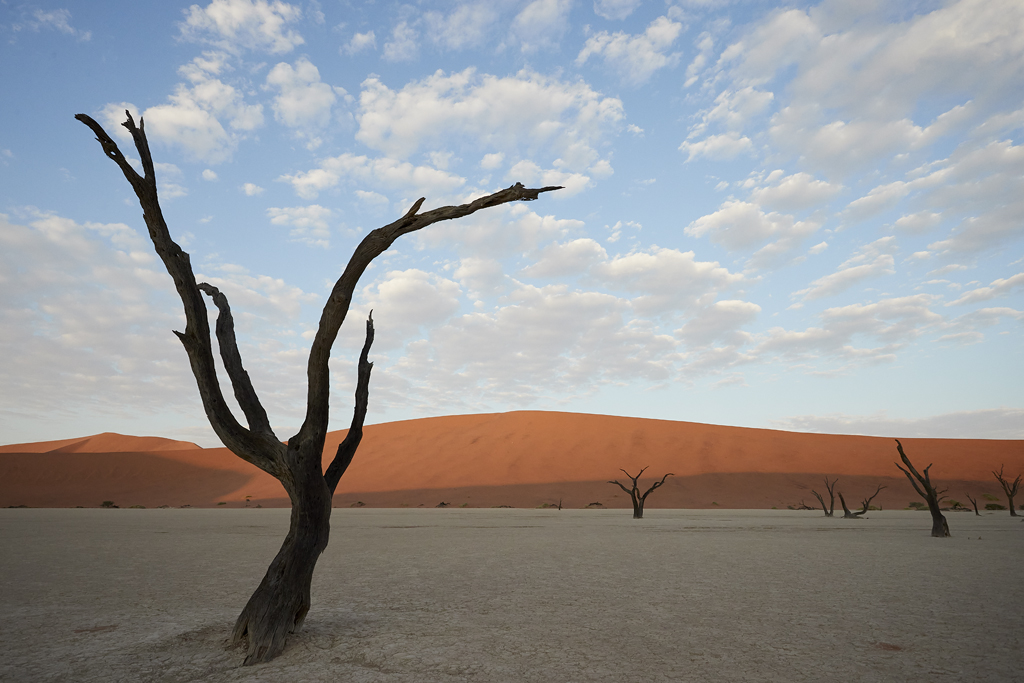 When it comes to iconic places photographically speaking, then Namibia has a number of them. The long dead trees of Dead Vlei in particular are right up there in terms of an Instagram photographers places to be seen. The sheer numbers of people filming themselves or with the aid of an “assistant” walking too or from the trees has gone off the scale in recent years so getting an unencumbered wide view like this is increasingly challenging and requiring of as early a start as you can to get there too. It was particularly nice when I was guiding a Natures Images group earlier this year to have a few clouds to include in the image as well.
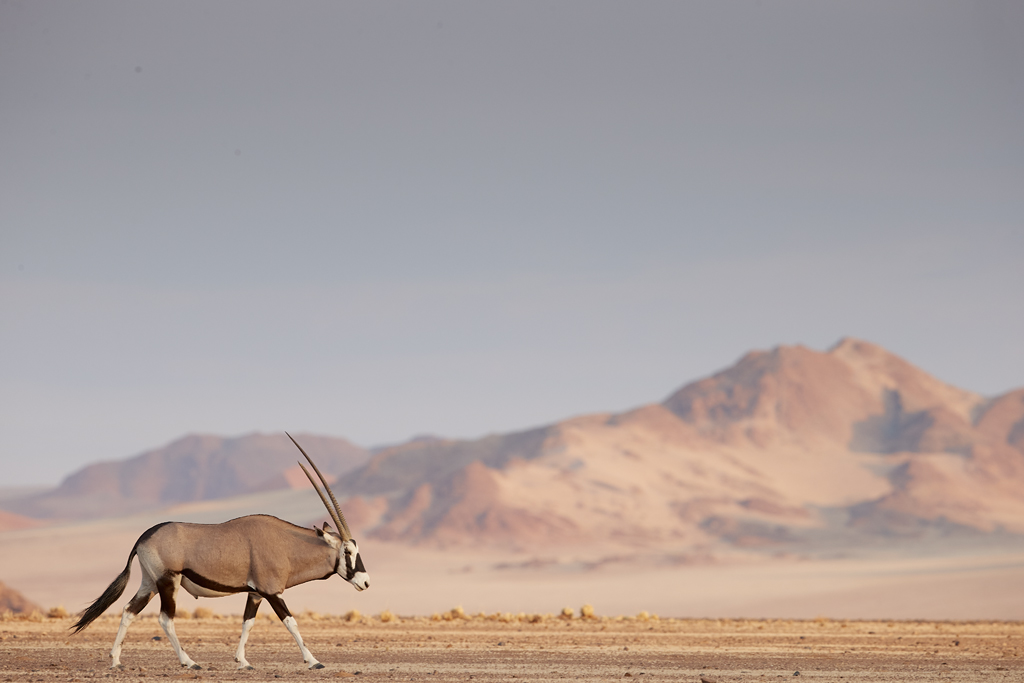
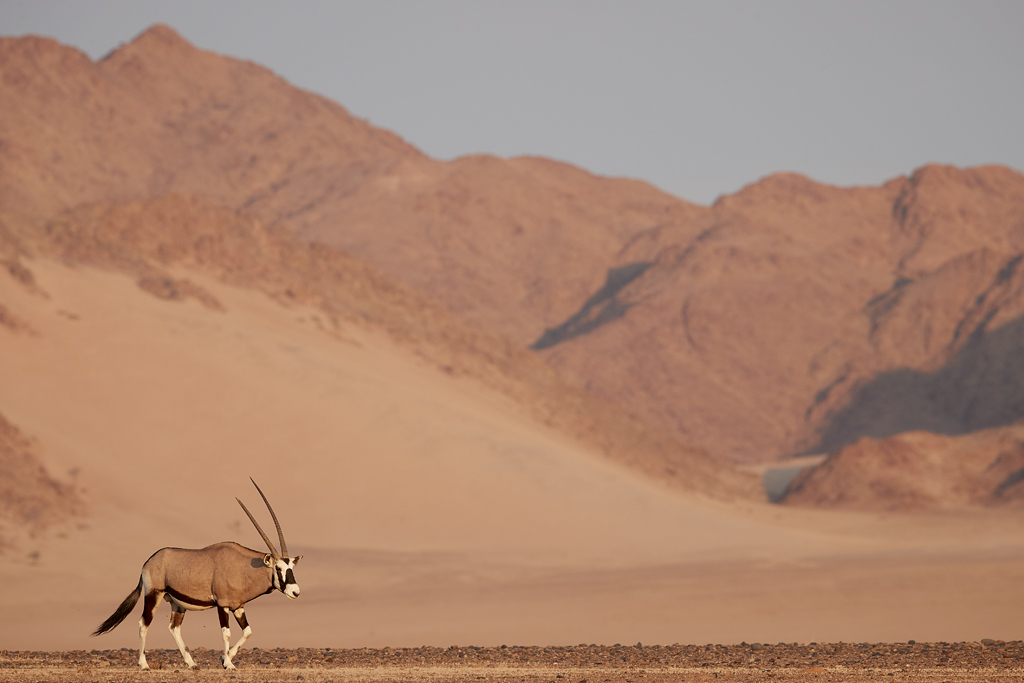
The area where Dead Vlei is situated is one of the most stunning in this extraordinary country but as memorable as the landscapes are then for me it’s always about been about tying them in with some wildlife when it comes to the images I’m looking for. Even when walking into Dead Vlei before the sunrise I was instantly absorbed when spotting a Gemsbok in the area near where the vehicles park up.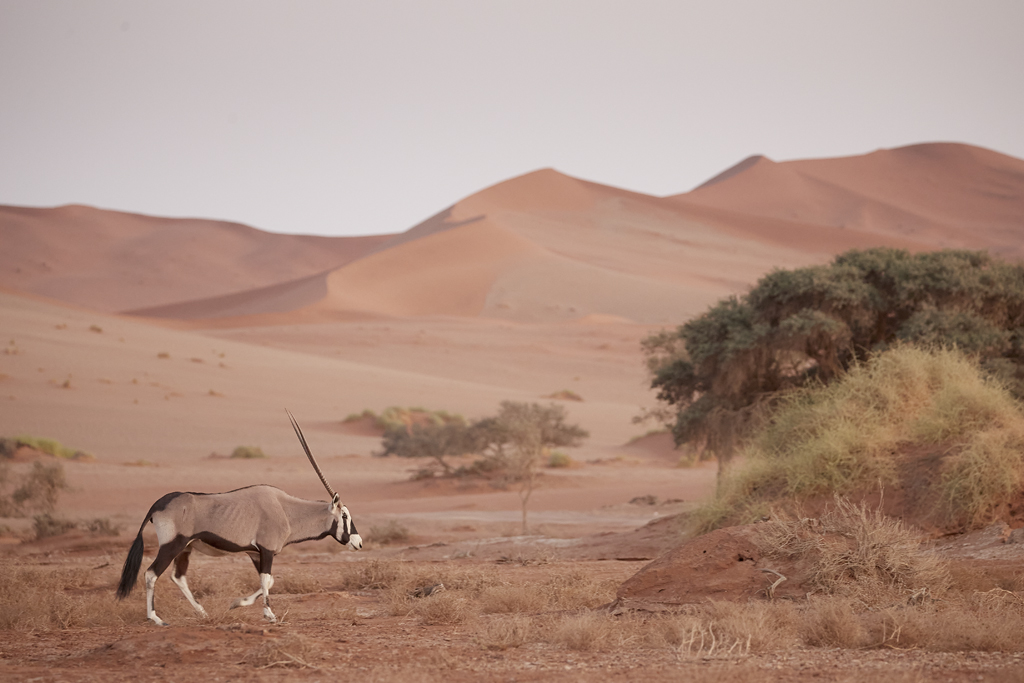 My thought process here is one of looking to embrace a sense of the location and reflect it when photographing wildlife. Doing this isn’t as simple as just using a shorter lens or working from further away but thinking about how best to capture the “where” when presenting the “what” within it. For me this decides just what the balance of the two elements needs to be and then being very mindful of the shape pattern and colours of the environment and, as in the following instances with more Gemsbok, anticipating just where amongst all of those elements an individual animal will be completely complimentary. I really feel at one with a place when working on these type of images and Gemsbok and the environment here are such a wonderful combination which I hope the next trio of images reflects.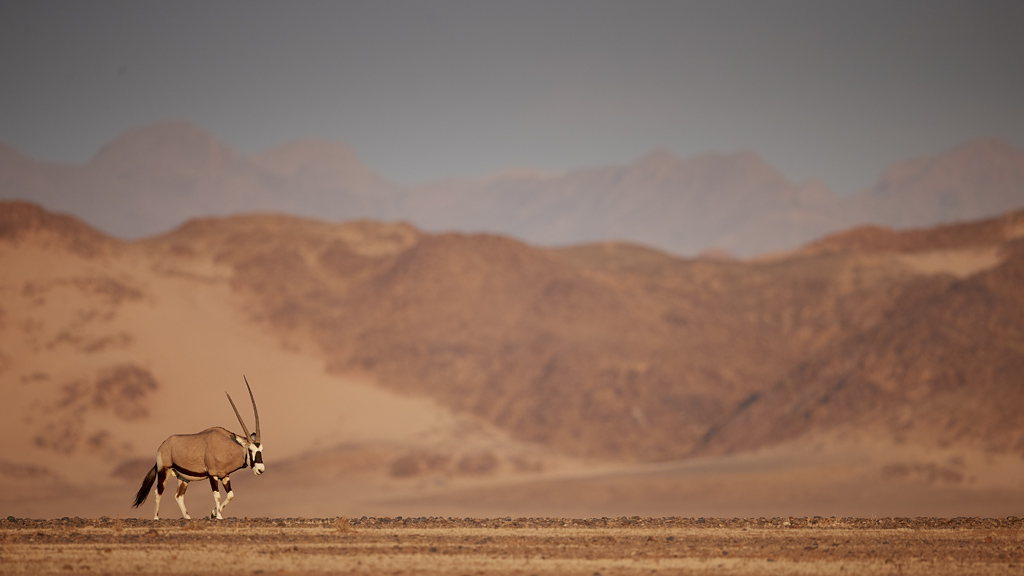
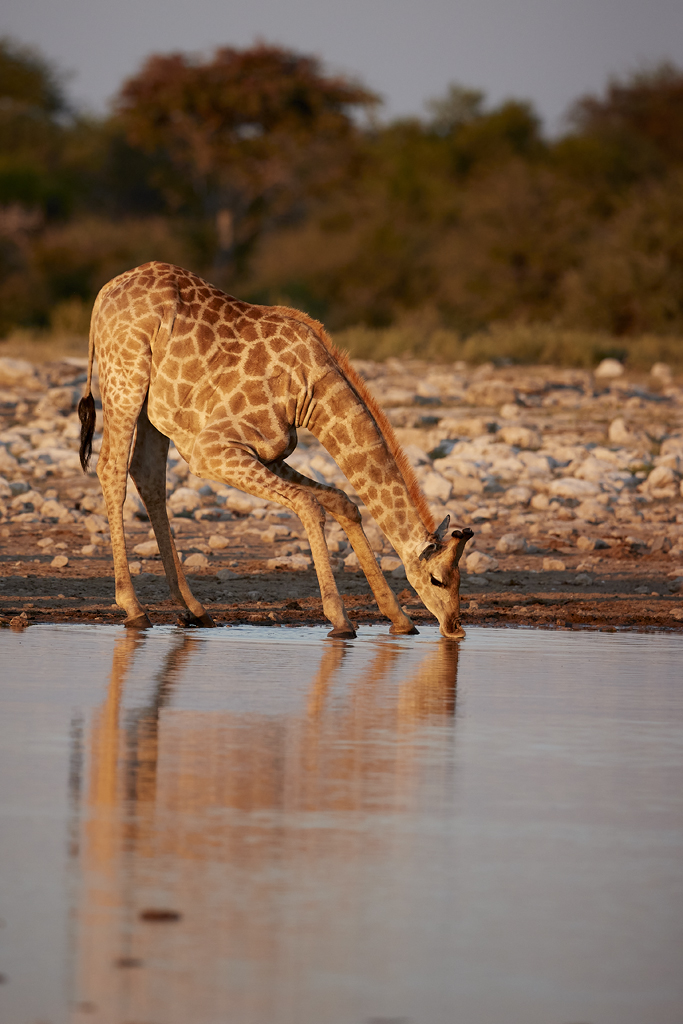
 Embracing where you are photographing comes in an array of different guises for me and sometimes it’s as simple as just knowing what a places is all about and photographing what that is even if it doesn’t become a huge element of the final image. Etosha National Park is another of Namibia’s crown jewels and working there for wildlife photography is very different to the more traditional safari locations of East Africa or even more southerly neighbours. Everything there is geared around waterholes with all of the wildlife being drawn there at some point of the day or night and so staking specific ones out for prolonged spells of the day almost always brings rewards. Over the many years I have been photographing here I have come to have a few favourites that I like to spend time with at the beginning and end of the day when light works to its best advantage and images like this can be achieved: the background might not be the cleanest but it’s unmistakably of Etosha so it delivers that sense of place for me at least and the light and reflections were superb on this particular evening.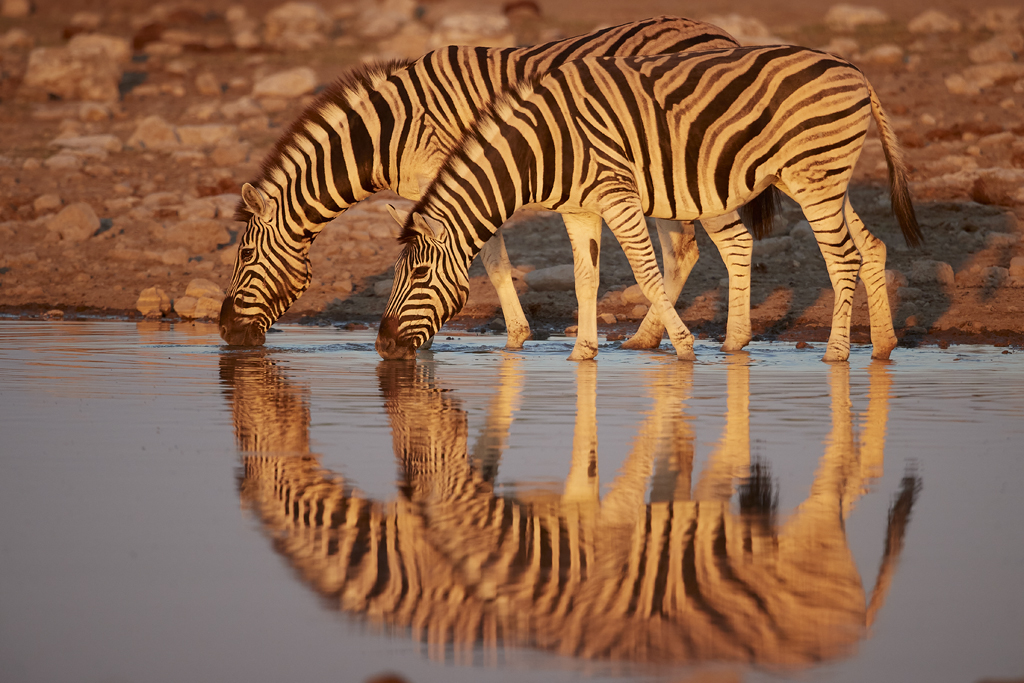
 Each waterhole also tends to have its own particular window in which herds of elephants come to take advantage of all the joys that water offers them: some are morning time, several are the middle part of the day and one of my favourites also tends to be an early evening destination. On this trip there was just a thin band of cloud across the final bit of sunshine but the soft even light actually worked really nicely with the soft greys of the elephants themselves and their sense of enjoyment of the place was almost contagious.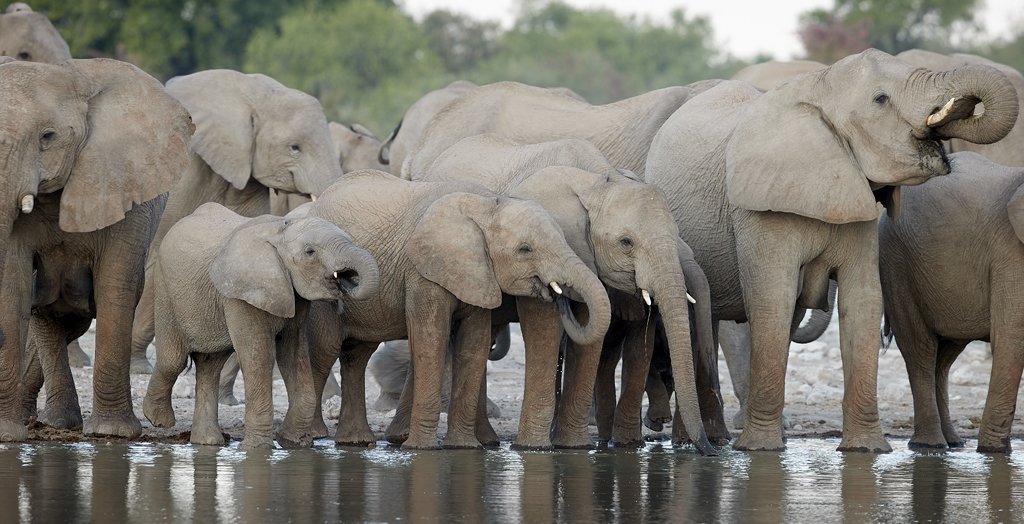
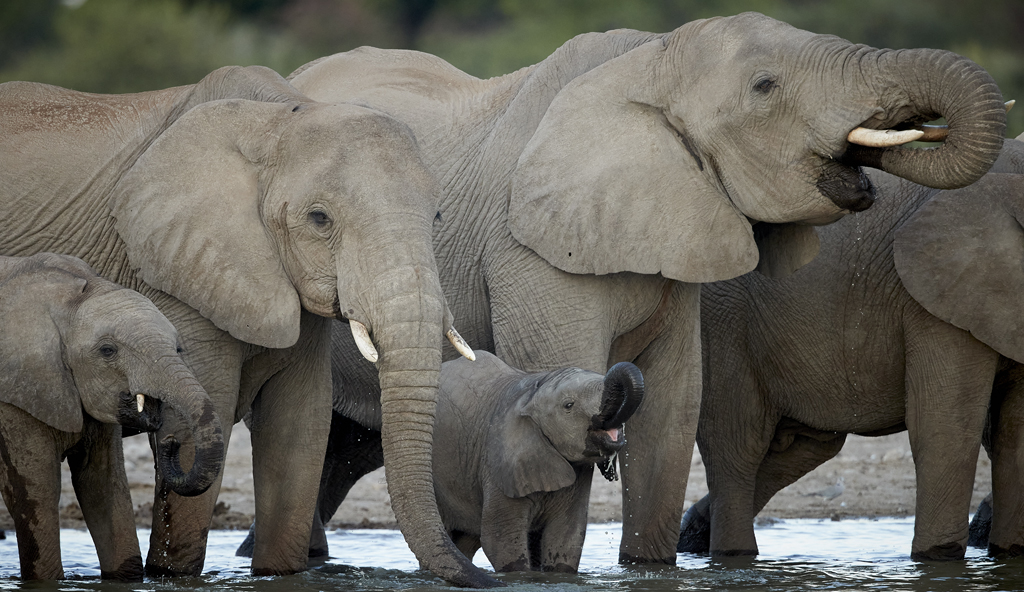
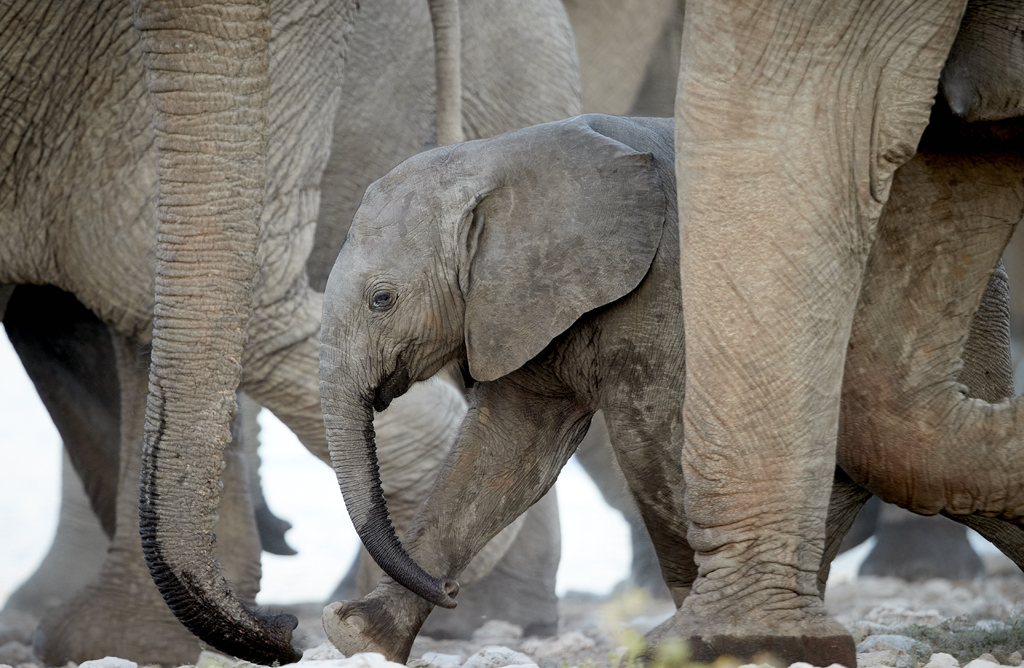
 When it comes to both elephants and places then the dry river systems in the north west corner of the country are not only my favourite place to work with them as a species but also probably my personal favourite place to simply be on the whole of the African continent. I missed it a great deal during the pandemic but was sent regular images and updates by my god friend Ueera who also drives for us here: the stop for breakfast on our first day there resulted in this image as I sat and re-absorbed just how magical it all is.
 The reason I wax so lyrical about here is simple: it’s a region that simply sums up the hardship and challenges of desert life that is what Namibia is all about and it’s not the area almost every other trips visits either making it even more special and unique. Finding elephants here just seems almost incongruous at times – Ueera just seems to have a nose for them having lived here all his life – and photographically it screams to have this environment itself as a huge element of any images. Normally I don’t like shooting when harshness and haze starts to become an issue but in some of these settings it too adds to the story…
 There is a population of around 40 or so individual animals who call this vast network of riverbeds home and they wander huge distances on pretty much a daily basis as they work between the always changing locations that offer food and water. Sometimes this is to be found in the riverbed itself and sometimes alongside meaning they are often to be found on the side of the walls created by the last flood/rainy season which was not at all in the preceding winter.
 Occasionally they will find a productive patch to get stuck into – they never destroy any tree or plant here incidentally, unlike their relatives elsewhere on the continent: it’s too precious to do this and so they graze and leave it to replenish for them to return to. When I’m lucky enough to come across them in any such a setting, my first thought is always what the best backdrop is going to be to tell the story of the environment that they are in. Obviously the angle and nature of the light and all those usual considerations come into play to but these images are about the where as much as the what and I try to think that way however big in the frame the elephant itself is too.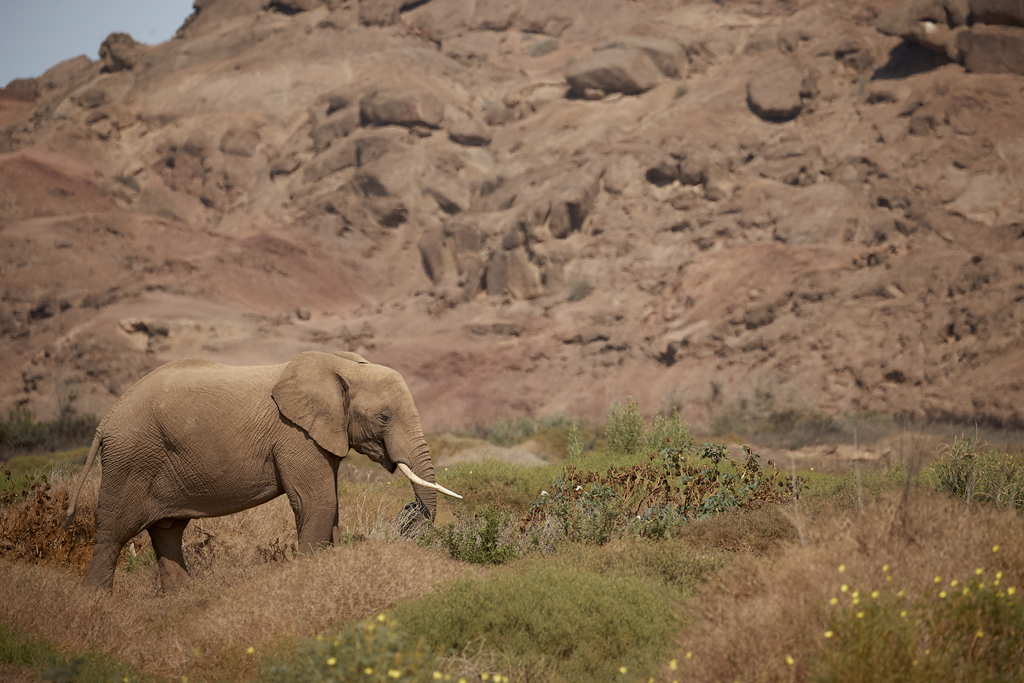

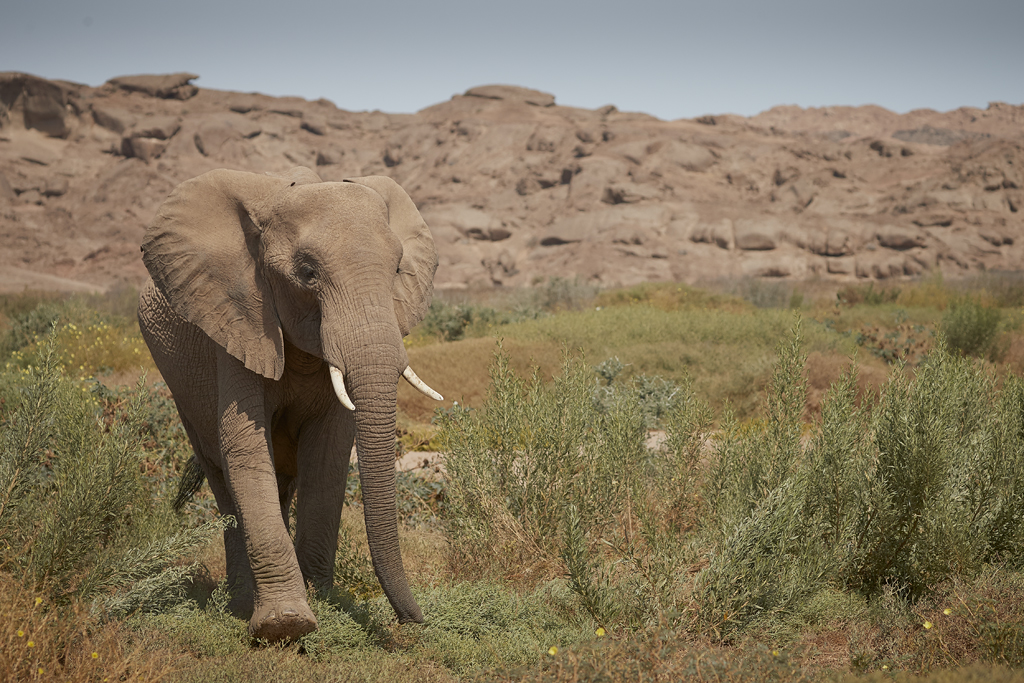
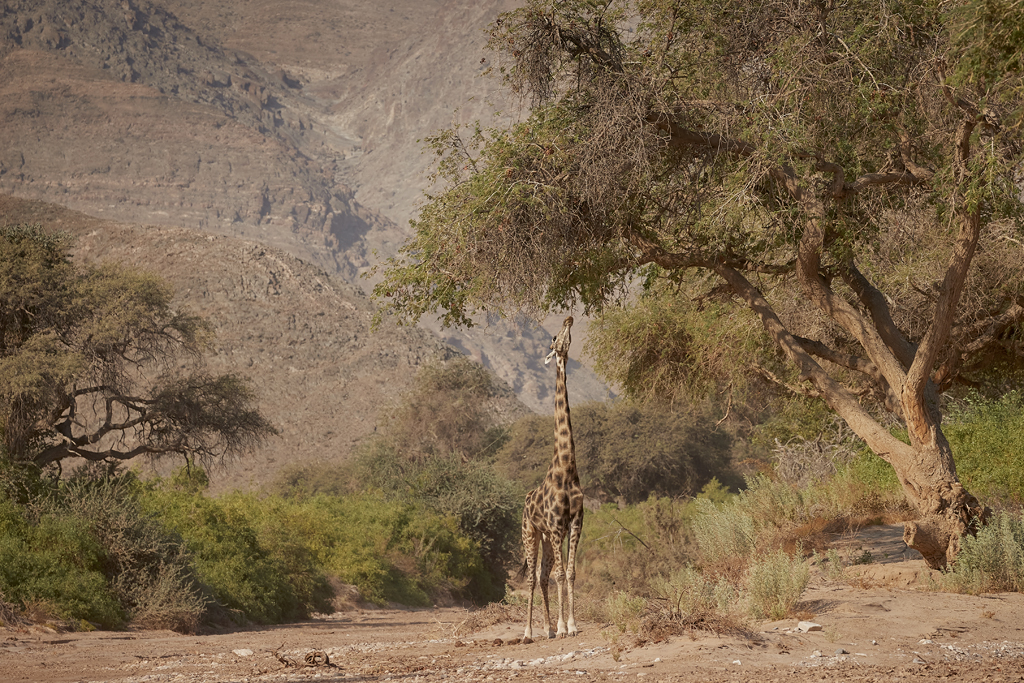
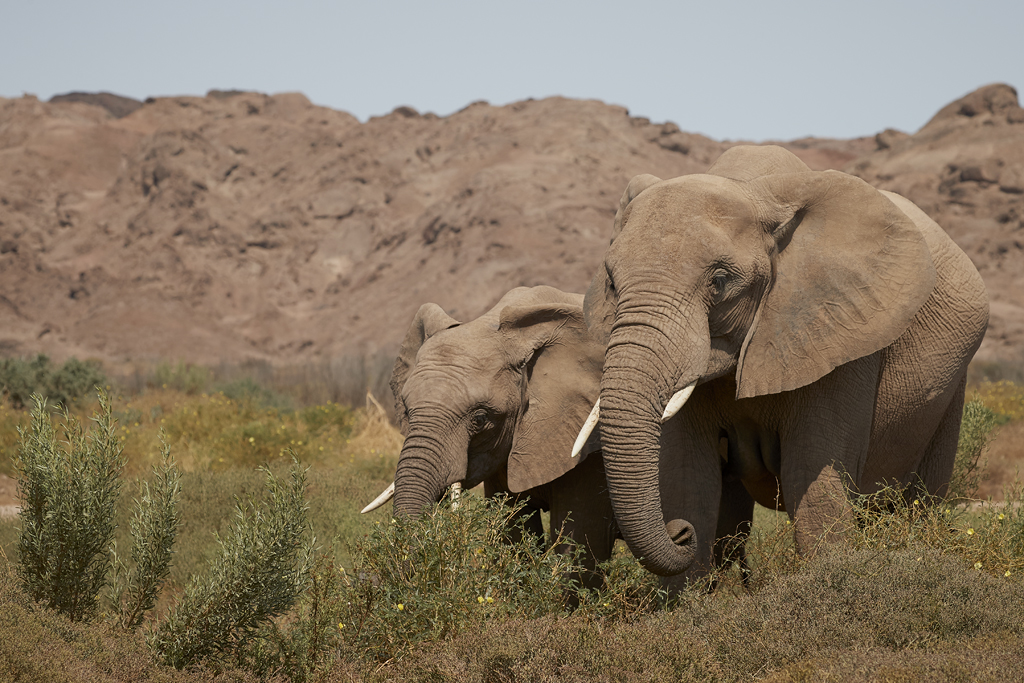 It’s not just elephants to be found here, although nothing is what you’d call common and there are often long spells of no wildlife at all as befits the harshness of the place. Of those giraffe are probably the one that best work in terms of looking extremely dramatic in the setting generally.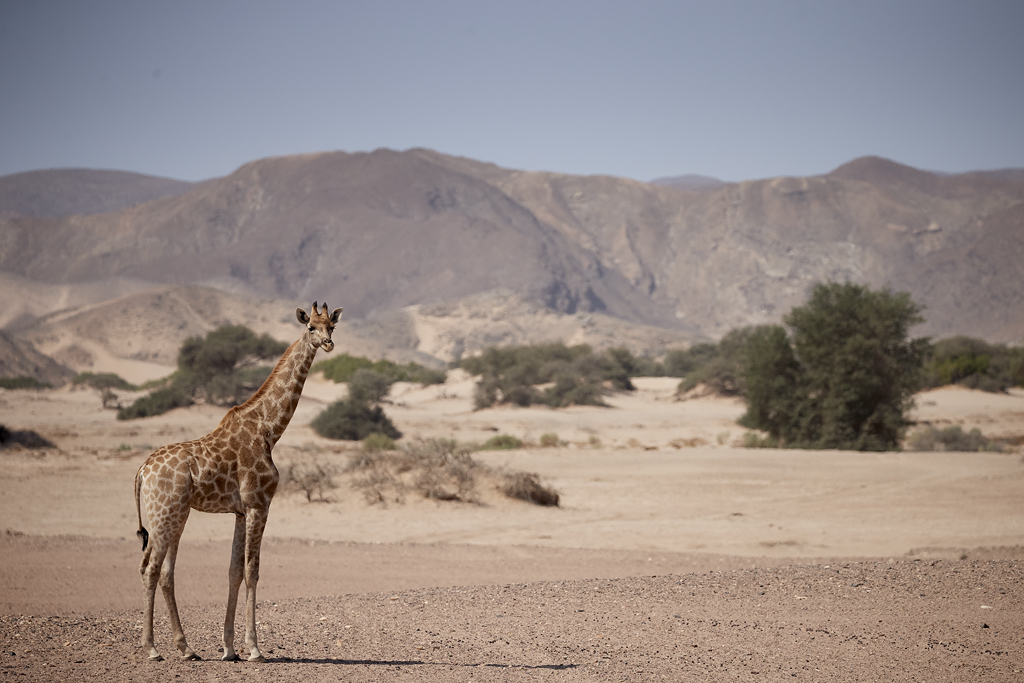
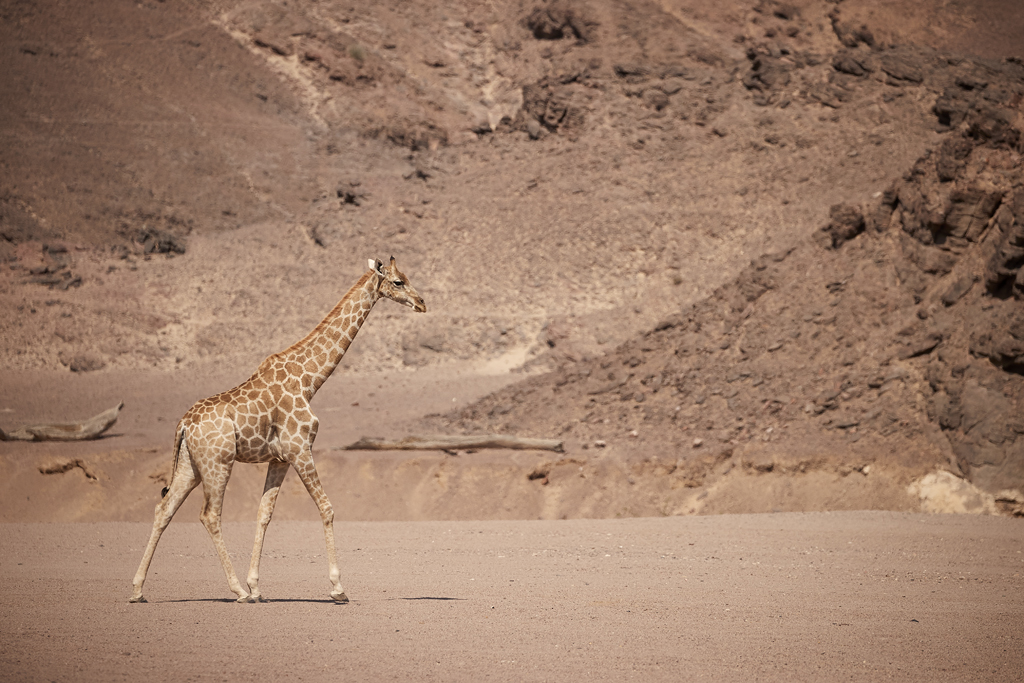 Both these images are very much about demonstrating where the giraffe is in a background sense but sometimes the actual setting itself is so dramatic that it’s necessary to work either further away to reflect this even more in the final image or use a different focal length of lens to tell the story in a different way. This particular individual who we came across feeding as we heading back to our base one day was in just such a location and needed just such a treatment for this pair of images, the first of which really gets to the heart of how I feel about creating images here.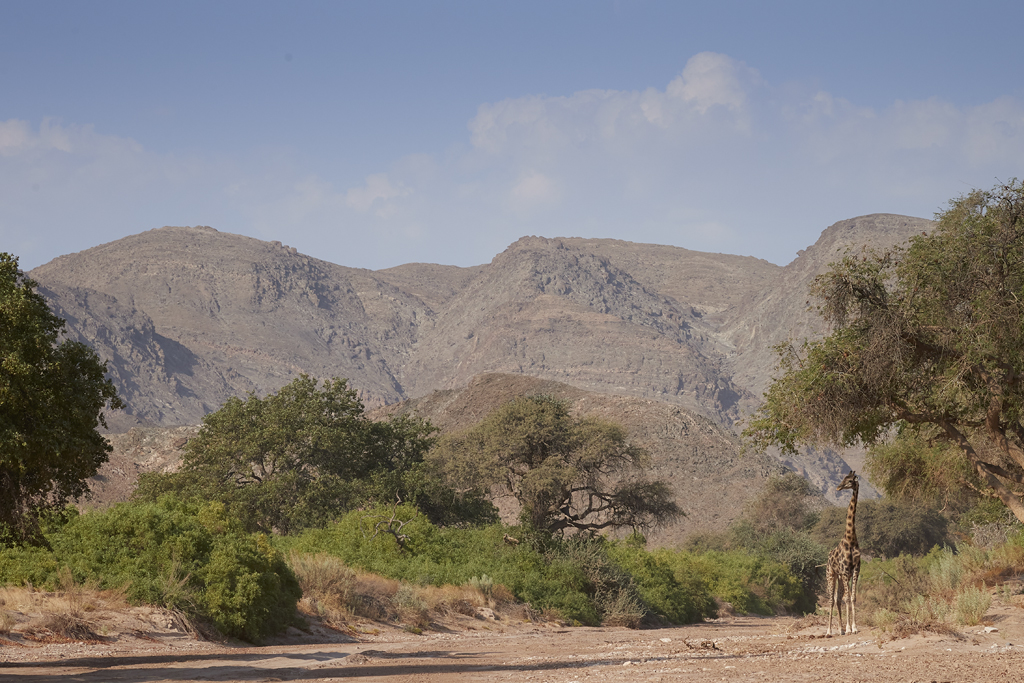
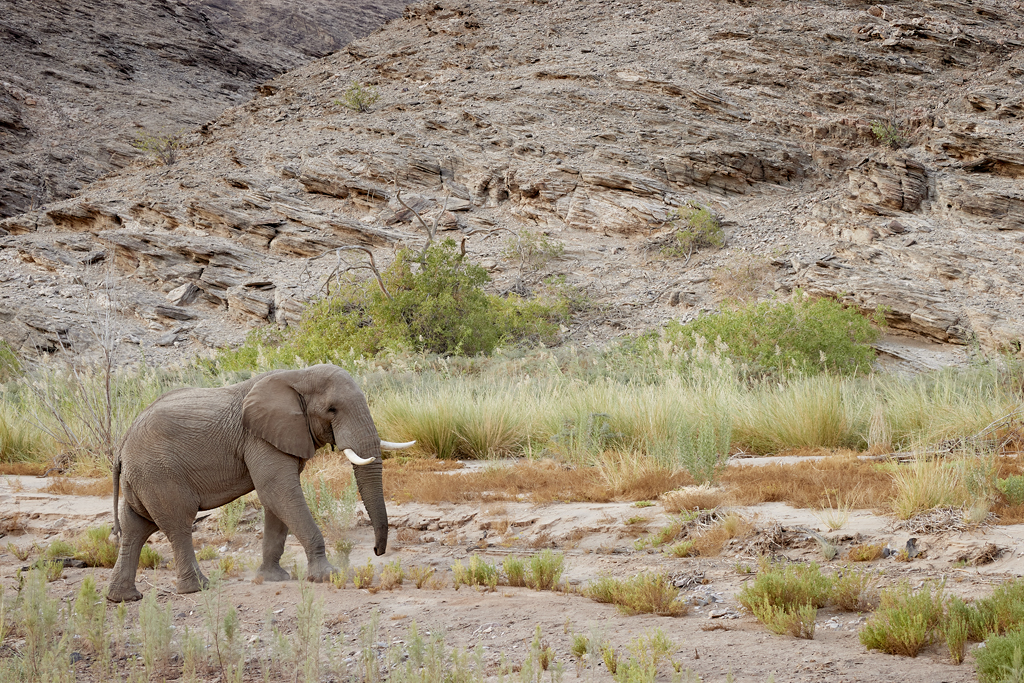
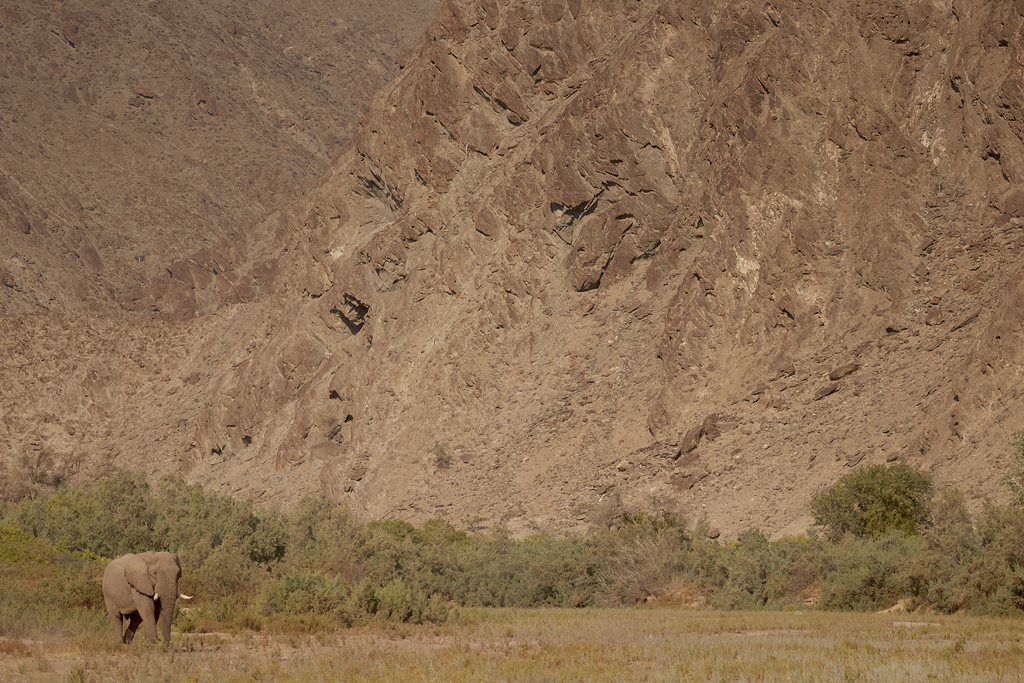
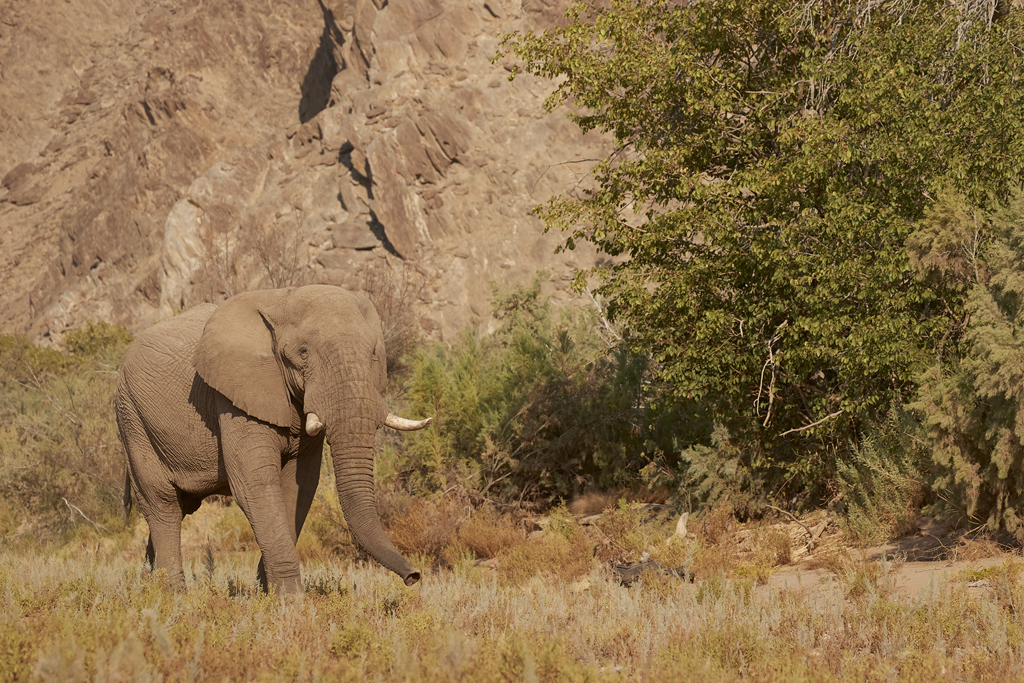
 This “small in the frame” approach works really well with the elephants to be found here too and on our final morning we came across this lone old bull elephant quite early on and proceeded to spend almost all morning with him as he fed and moved along the riverbed at his own pace.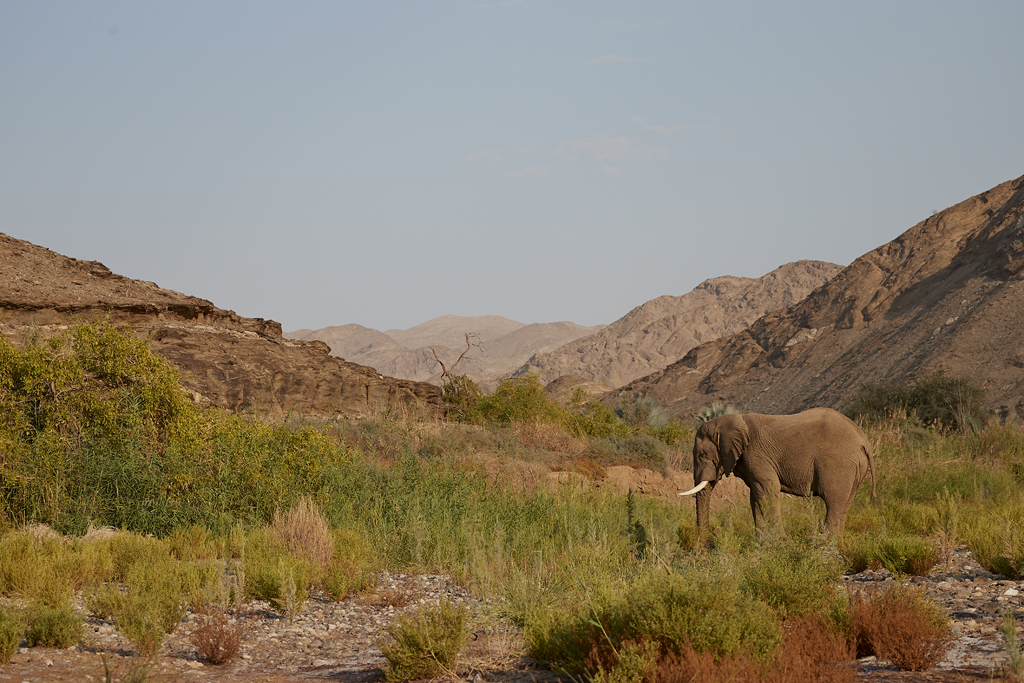
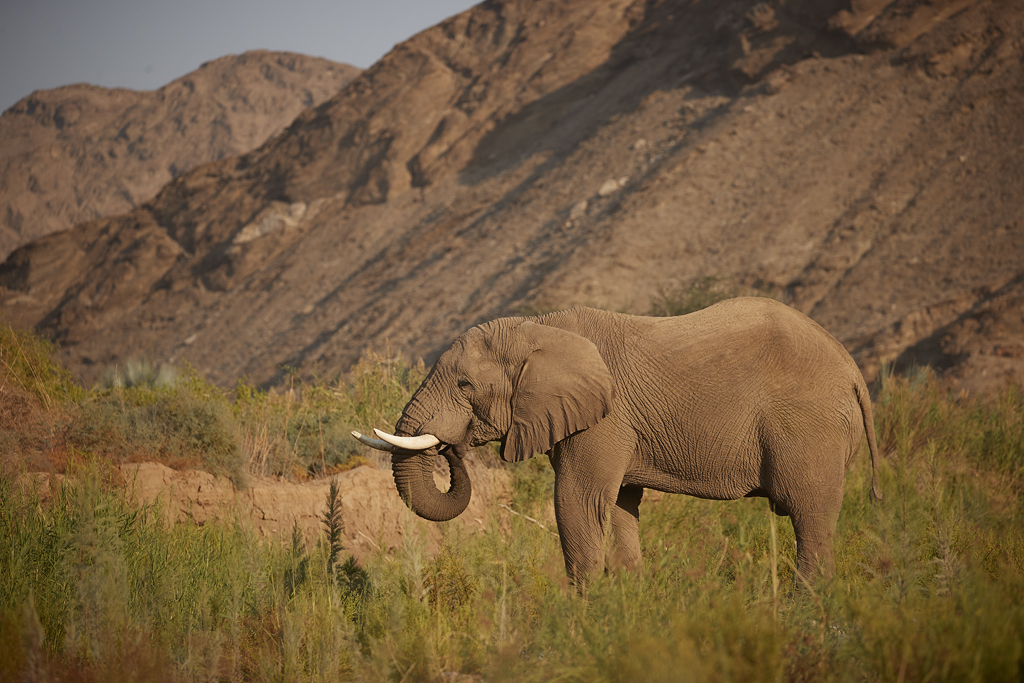 He is over forty years old and his name is Arnold and it’s always a real joy to see him as I first did so here about 15 years or so ago on my first visit here and time spent in the area wouldn’t be the same without spending some of it with him. When I think of the sheer vastness of the area the chances of doing so are so small but he does have a knack of just turning up when I’m there and it’s always a thrill. Although it can be a bit of a love:hate relationship at times I know Ueera is always pleased to find him for me too. It was even more special this year as a few days after leaving here a guide from a small business helping me out for a morning near Swakopmund introduced himself as Arnold! When we mentioned we had met an elephant named Arnold a few days earlier he proceeded to tell us of his time in the are when the first camp was being built and how a small group of guides there chose to name any elephants they came across and this individual was christened by him! He was as delighted to know Arnold still graced the river beds here as I was to photograph him once again.
Hopefully this final set of images of my longstanding subject (I can’t say friend as he has charged me a couple of times as his temper isn’t the best these days – something that befalls us all as we get a bit older I guess) reflect just how trying to combine a real sense of place as well as a wildlife subject in it is so valuable a thought process. It’s what makes Namibia such a special place to photograph in and although considerably more challenging in terms of finding things to work with, somewhere that for me offers more rewarding and impactful images when it all comes together.
 Thanks again Namibia and Arnold in particular: until next time (and the time after that too!)
Mark
Back to news index
2 thoughts on “Embracing the sense of place in Namibia”
Please address the areas highlighted below
Really excellent stuff…… saving up.
It’s an amazing place and trip Paul – thanks.